Are you an artist, creative professional, or hobbyist looking for the perfect space to nurture your craft? This blog explores how a garden studio can transform your creative process and the key considerations if you’re looking to create your own.
We invited three working artists to set up their studios in Malvern garden rooms at the new RHS Badminton Flower Show and craft live for five days straight during the show. Their experience reveals exactly what makes a garden room work as a creative studio and includes all the practical advice you might need.
Key Takeaways
- Malvern Garden Buildings can be tailored for your creative discipline. If you need to stand or accommodate larger works of art a high pitch roof is an option.
- The natural light in a garden studio is amazing and with Malvern Garden Buildings you can decide the layout of windows and doors for the best working environment.
- A fully insulated, energy-efficient Malvern garden room can serve as a dedicated art studio, craft workshop or creative space that works comfortably year-round, not just in summer.
- Outside spaces like balconies and covered outdoor areas provide perfect spots for micro breaks and sources of inspiration when looking out on nature.
- Most Malvern garden rooms used as art studios fall under permitted development rights, though it is always worth checking local rules, especially in conservation areas.
- Well-designed garden studios increase appeal for future buyers, making your property more saleable and adding value.
- Makers and artists who work from their Malvern Garden Buildings have the flexibility to host open studios, workshops and share behind-the-scenes glimpses of their creative process, while keeping their personal home life private.
Why Choose a Garden Room as a Creative Studio?
The Benefits of a Garden Room as a Creative Studio
There is plenty of talk around work-life balance but the feeling of separation you feel when you step out of your back door, cross a few metres of lawn, and open the door into a warm, light-filled garden studio is hard to beat. Inside, your materials are exactly where you left them. No dining table to clear, no interruptions and no worrying about children or pets playing with equipment or potentially harmful art materials.
Garden rooms provide a distraction-free focus for creative work that a spare bedroom cannot match. Natural light boosts creativity and mood in garden studios, and views of greenery and birdsong provide restorative breaks that measurably reduce stress.
Whether you’re a painter, ceramicist, printmaker, embroiderer, illustrator or digital designer, a purpose built space designed around your discipline changes everything. Insulated garden studios are a building for year round use, which supports the creative process by keeping the workspace comfortable and usable through the changing seasons, and a garden room can serve multiple creative purposes over time, evolving from an art studio to a writing retreat as your practice shifts.
Malvern Garden Buildings are specialists in British-made, premium garden rooms and bespoke garden studios. Every building is made to order using high-quality materials, with a process that covers planning, design, delivery and installation.
Championing British makers and traditional crafts at RHS Badminton
For over a decade Malvern Garden Buildings hosted independent makers and craftspeople in Ranelagh Gardens for the RHS Chelsea Flower Show before the Artisan Area made way for the Houseplant Studios. Over the years, we had the pleasure of providing creative workspaces for well-known artists such as Rob Ryan, Cath Kidston, Wayne Hemingway, Lady Conran, Nikki Tibbles and Orla Kiely.
When the opportunity arose again at the RHS Badminton Flower Show 2026 (8–12 July, Badminton Estate, Gloucestershire), to give three working artisans rooms to promote their work we leapt at it. We also asked them to design and dress their garden studios to create inspiring spaces to work.
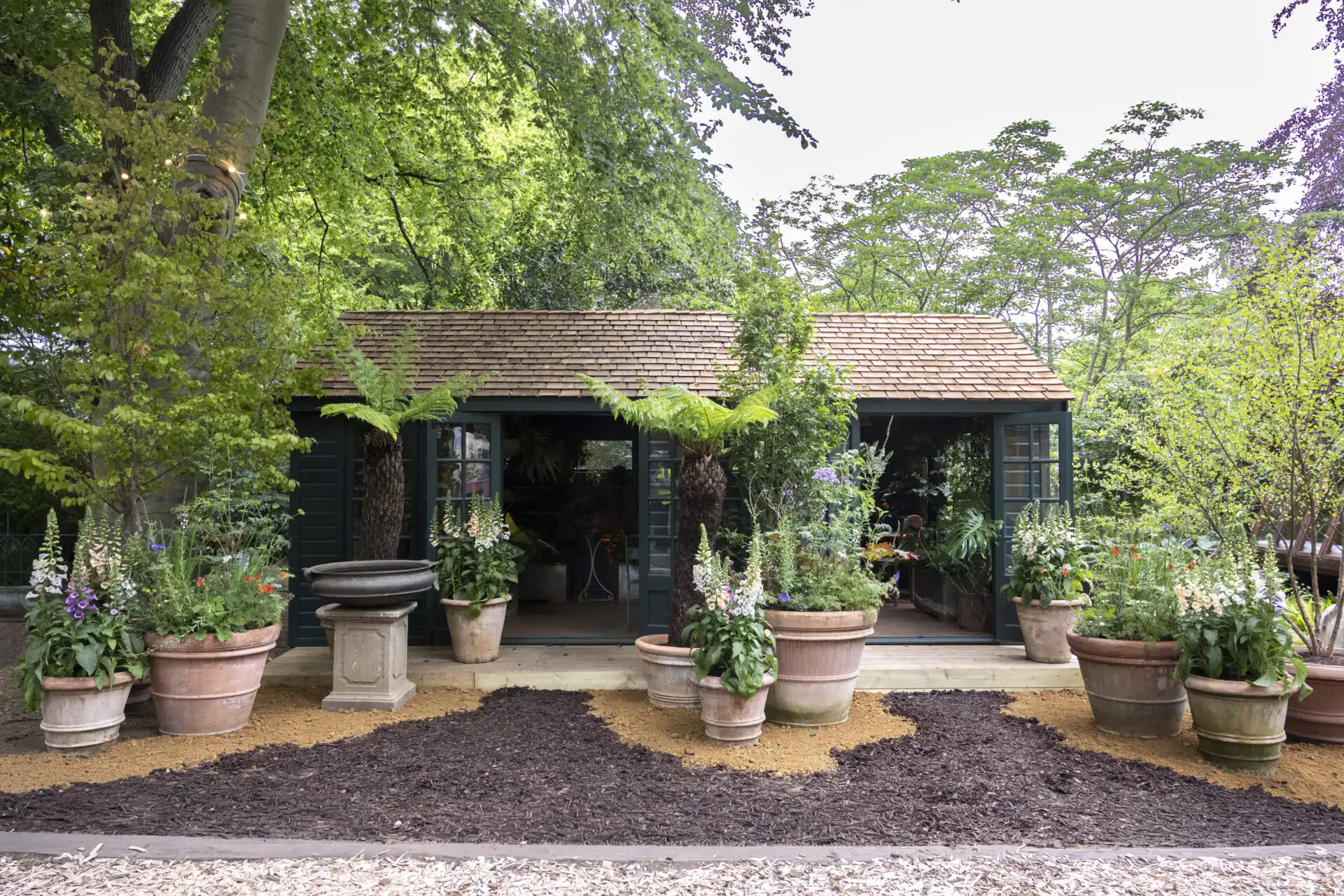
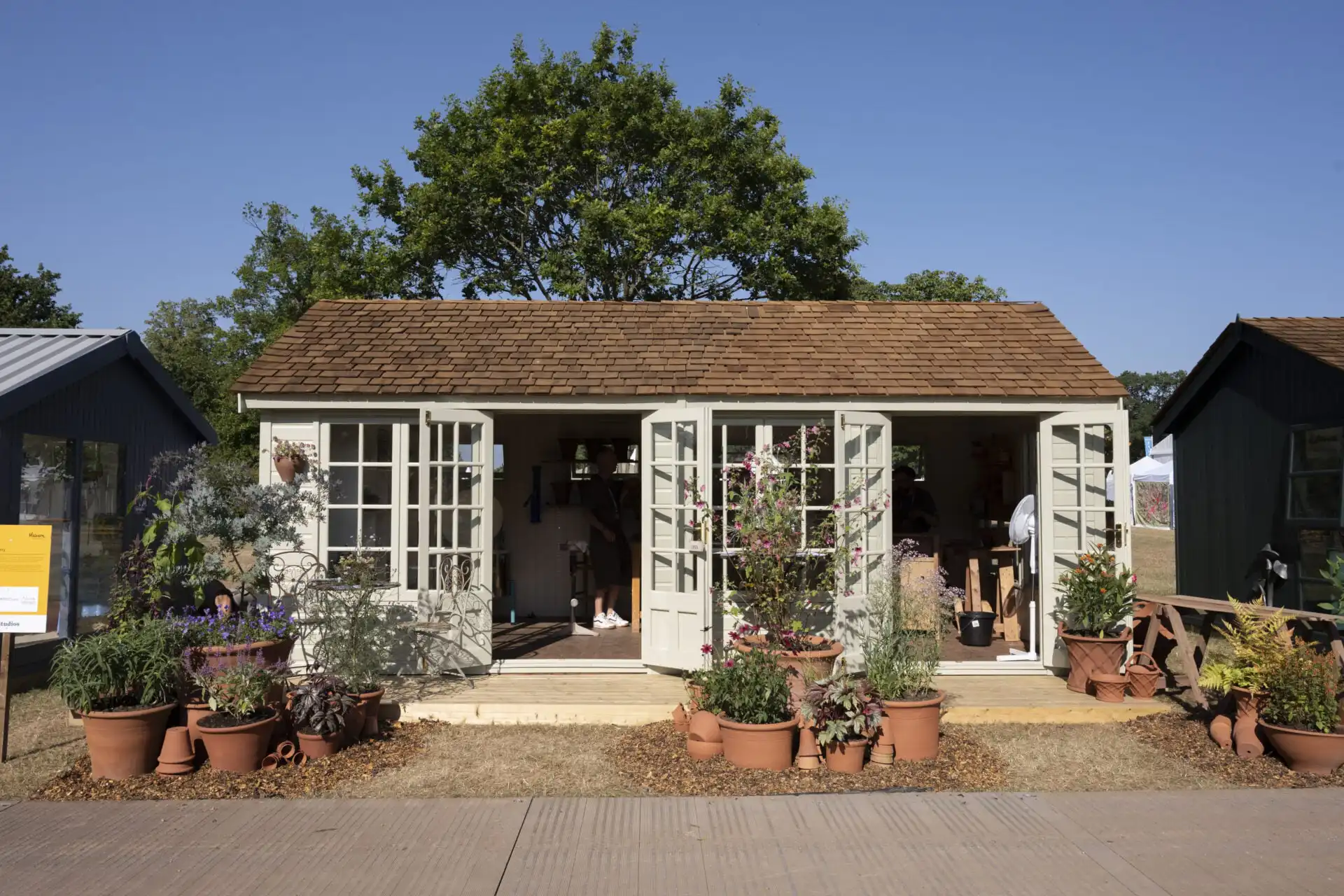
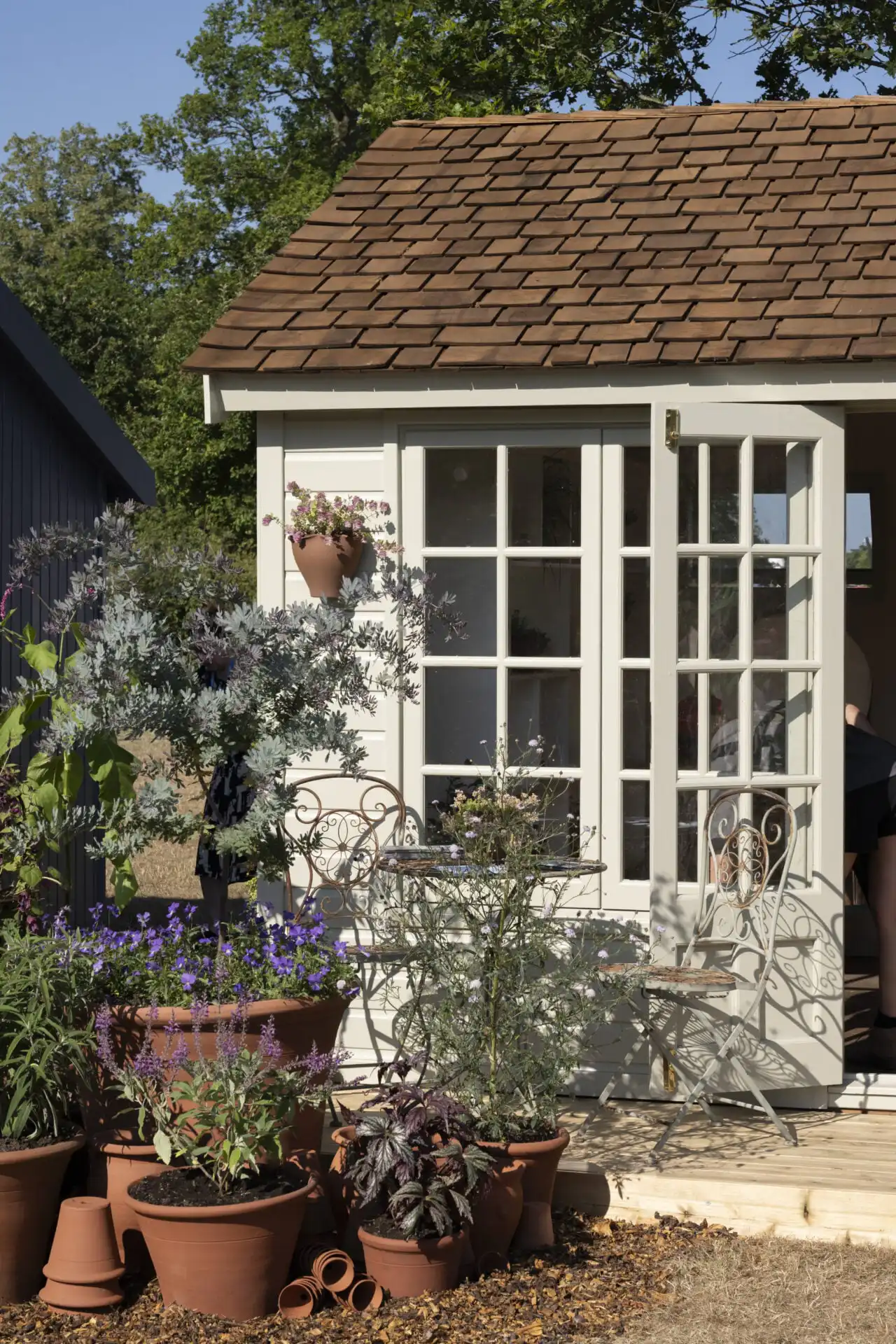
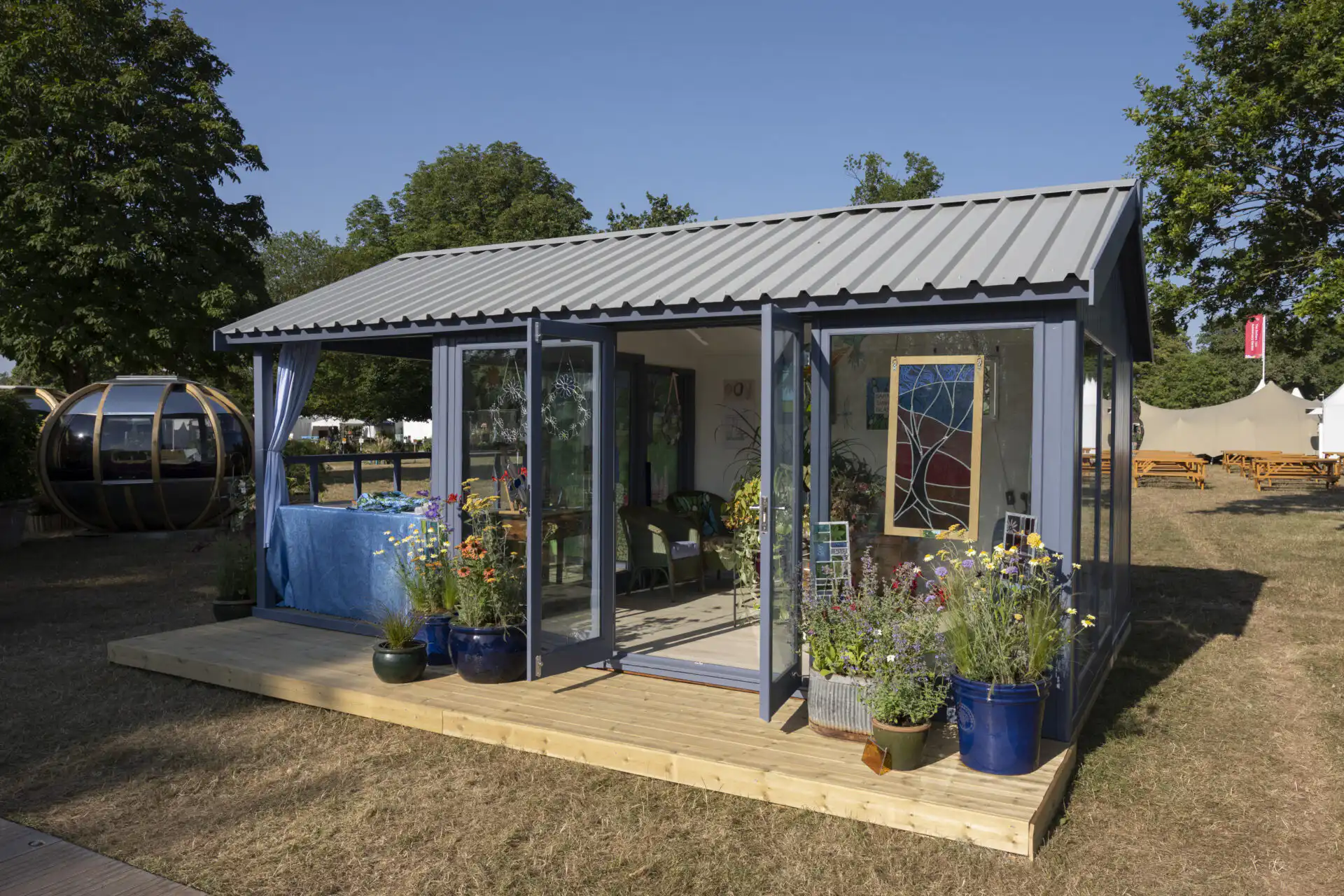
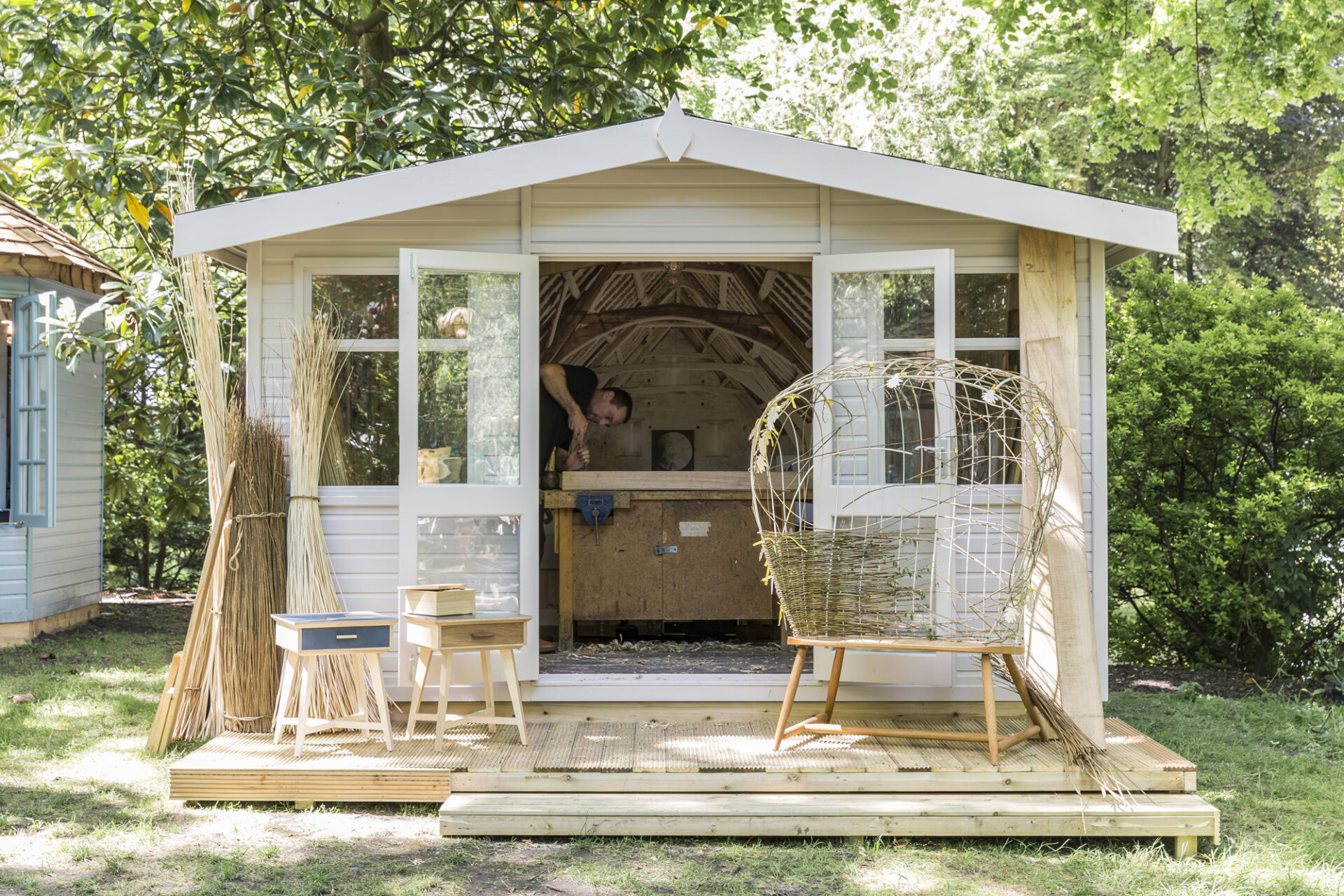
During the show, the Artisan Studios looked out on the beautiful Artisan Gardens and were accessible for visitors to walk in, watch, ask questions and imagine the same space at the end of their own gardens. Each artisan occupied a different Malvern garden studio, demonstrating how an artist studio in the garden can be adapted to different crafts and working styles.
Laura Jane Wylder: A Sculptor’s Art Studio
Creating a Sculptor’s Sanctuary
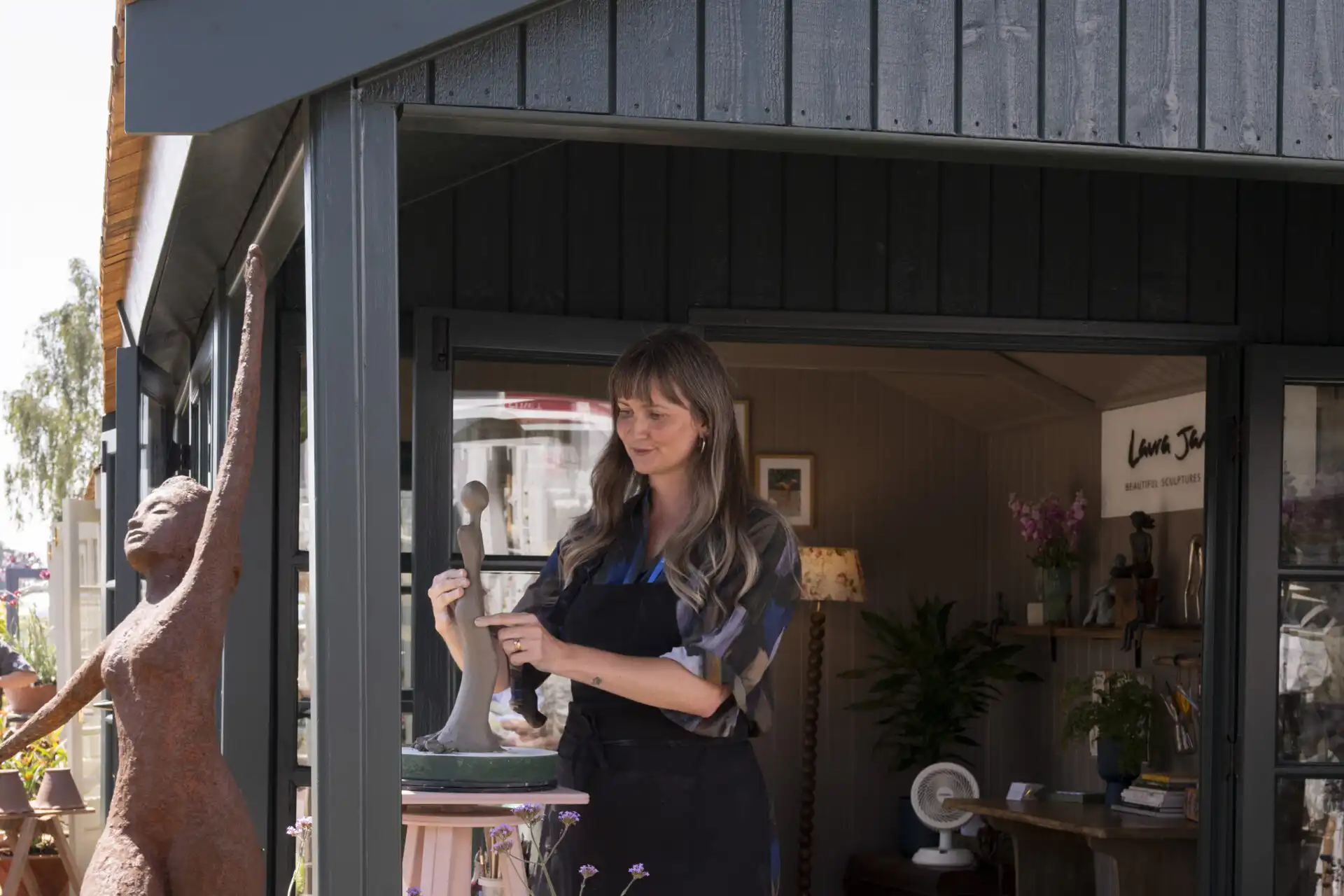
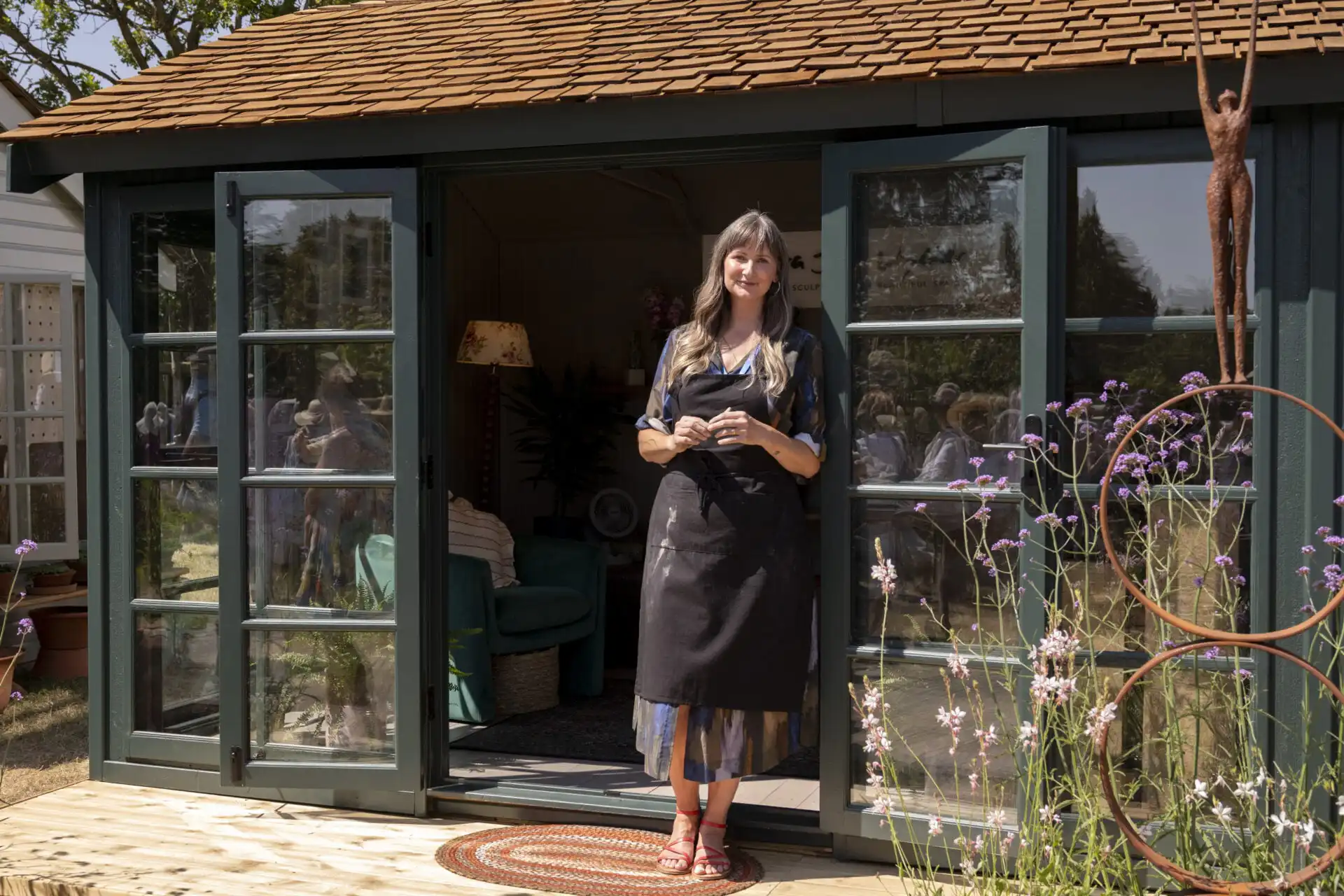
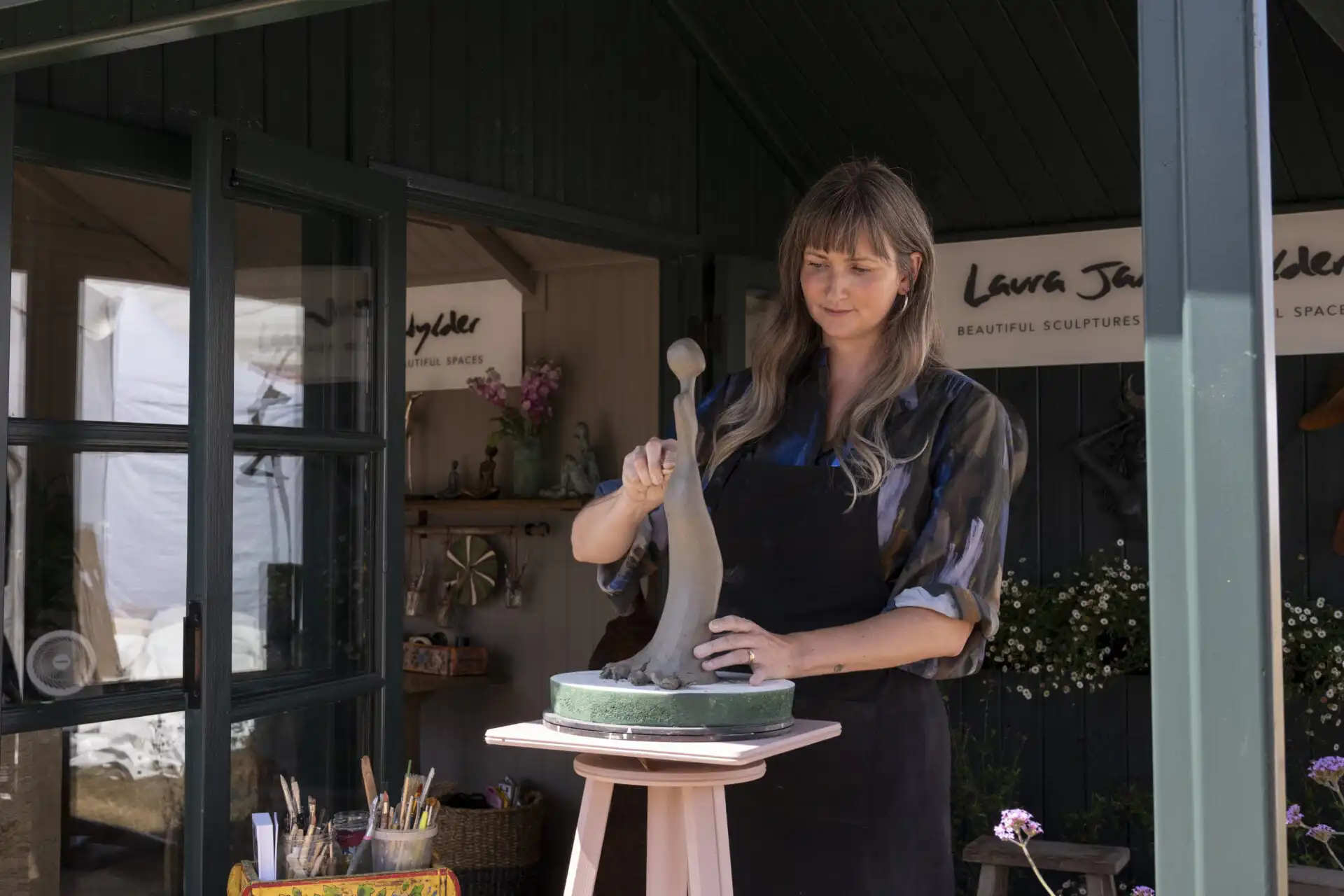
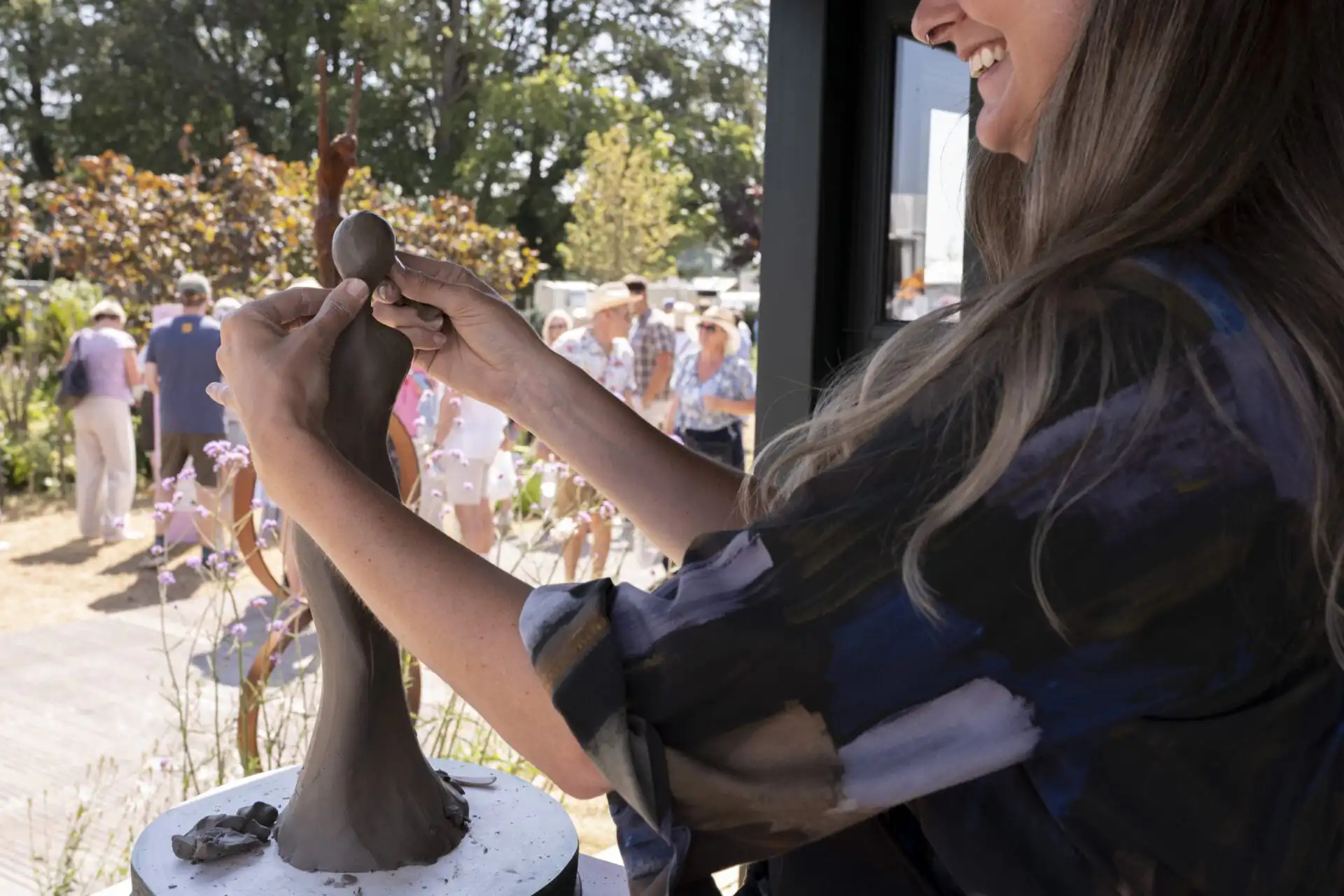
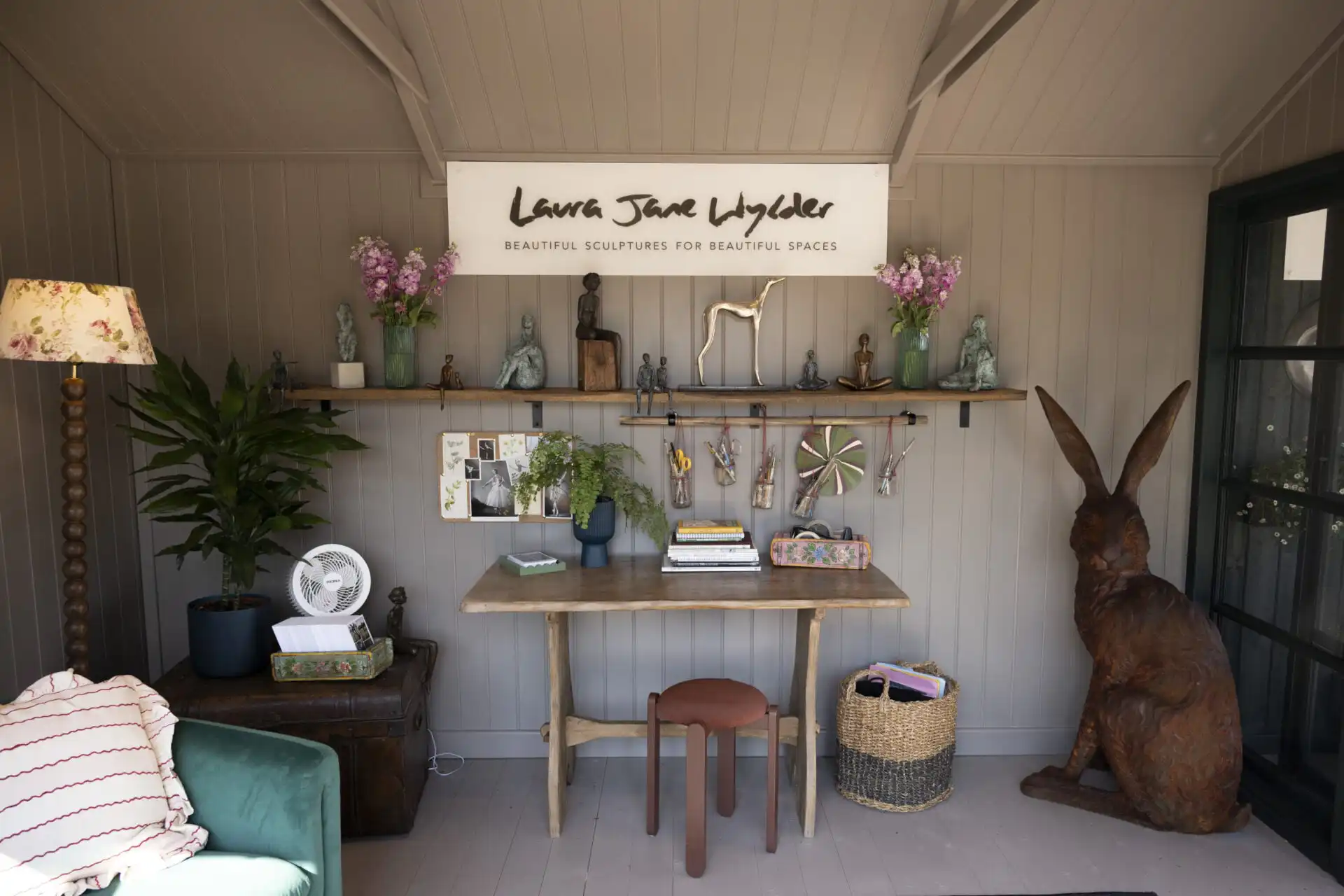
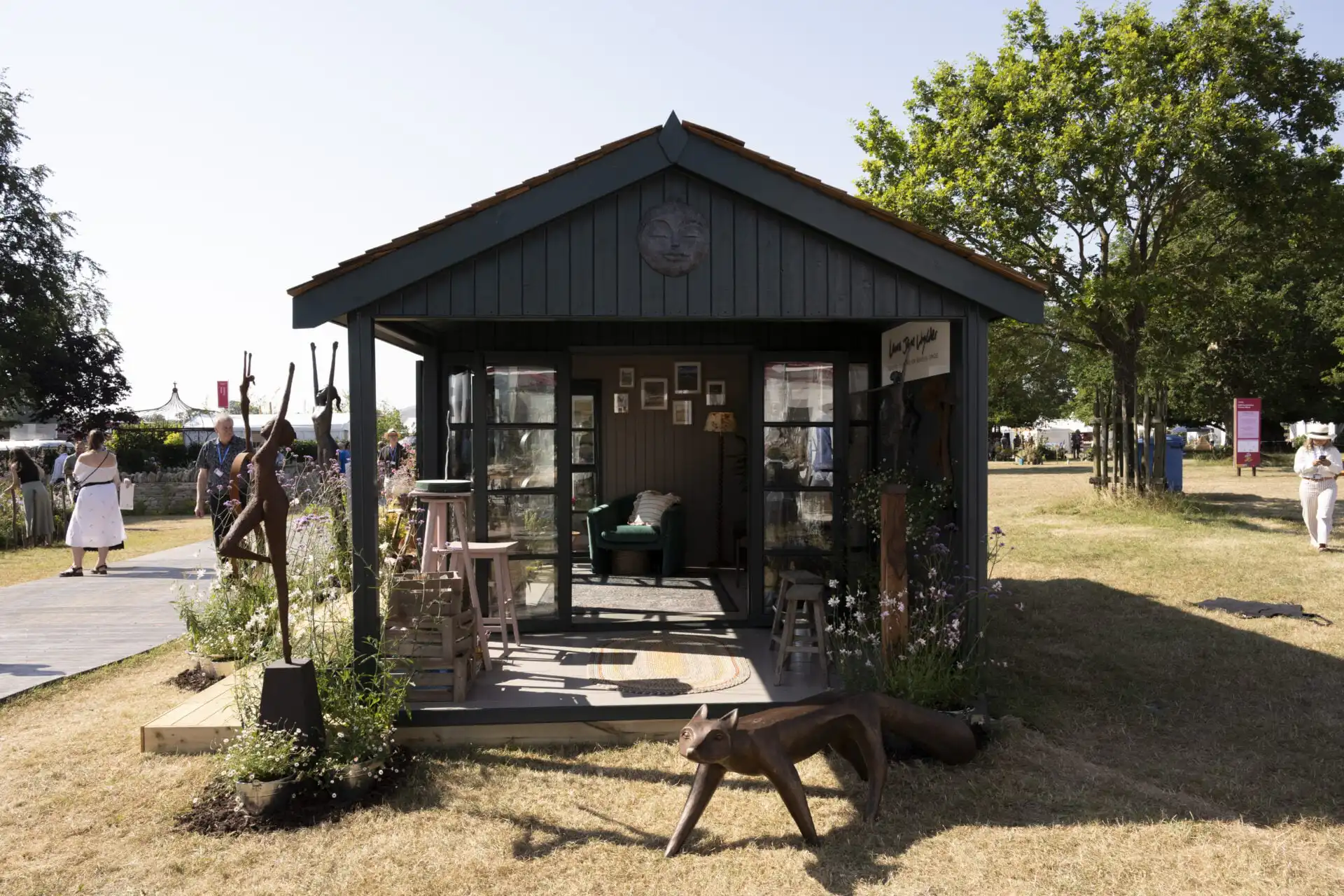
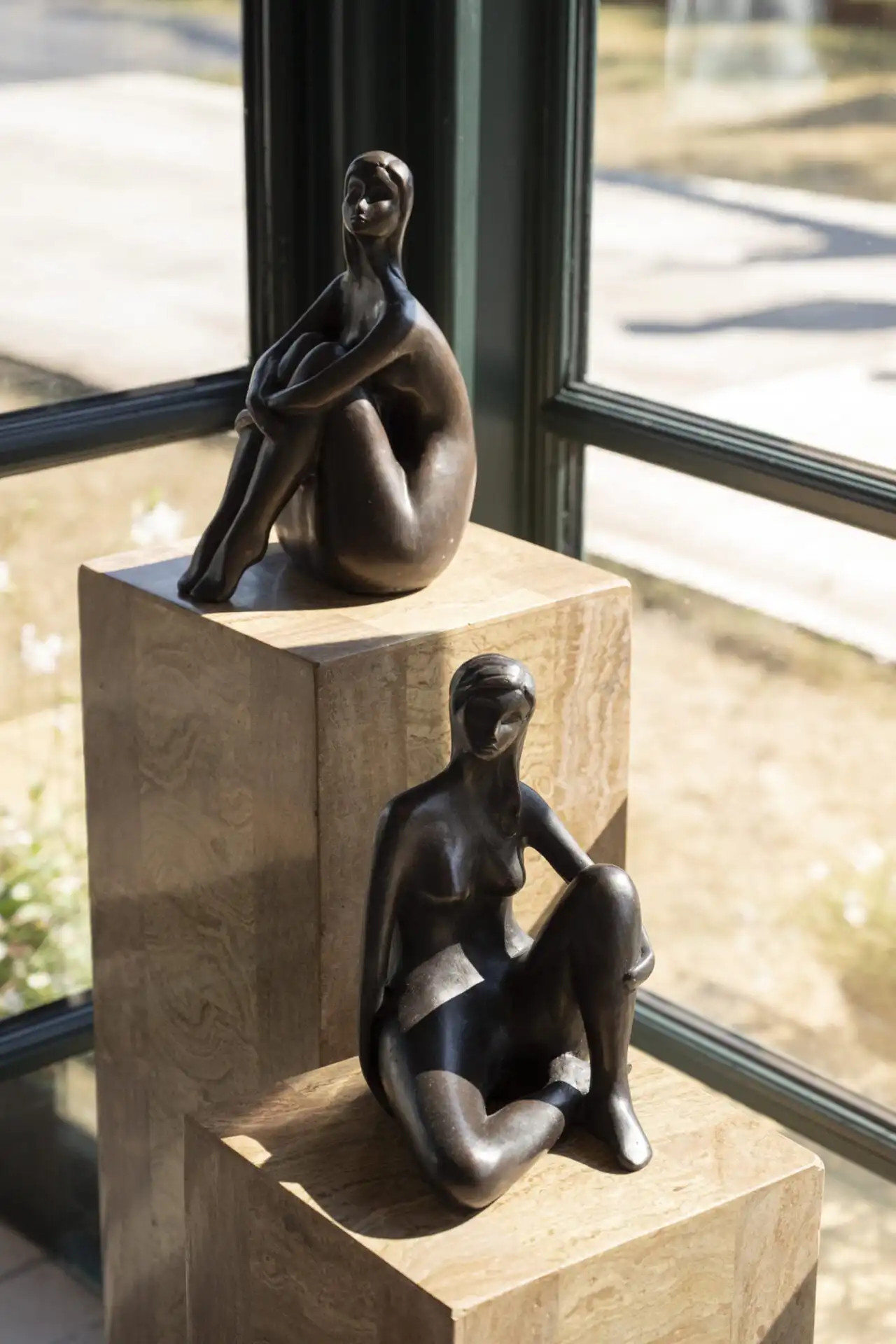
Laura Jane Wylder road-tested a Studio Pavilion with heritage windows and a cedar roof as her workspace, describing it as “A Sculptor’s Sanctuary.” She displayed her bronze and stone sculptures within the enclosed studio while demonstrating clay modelling on a wire armature beneath the shelter of the decked veranda.
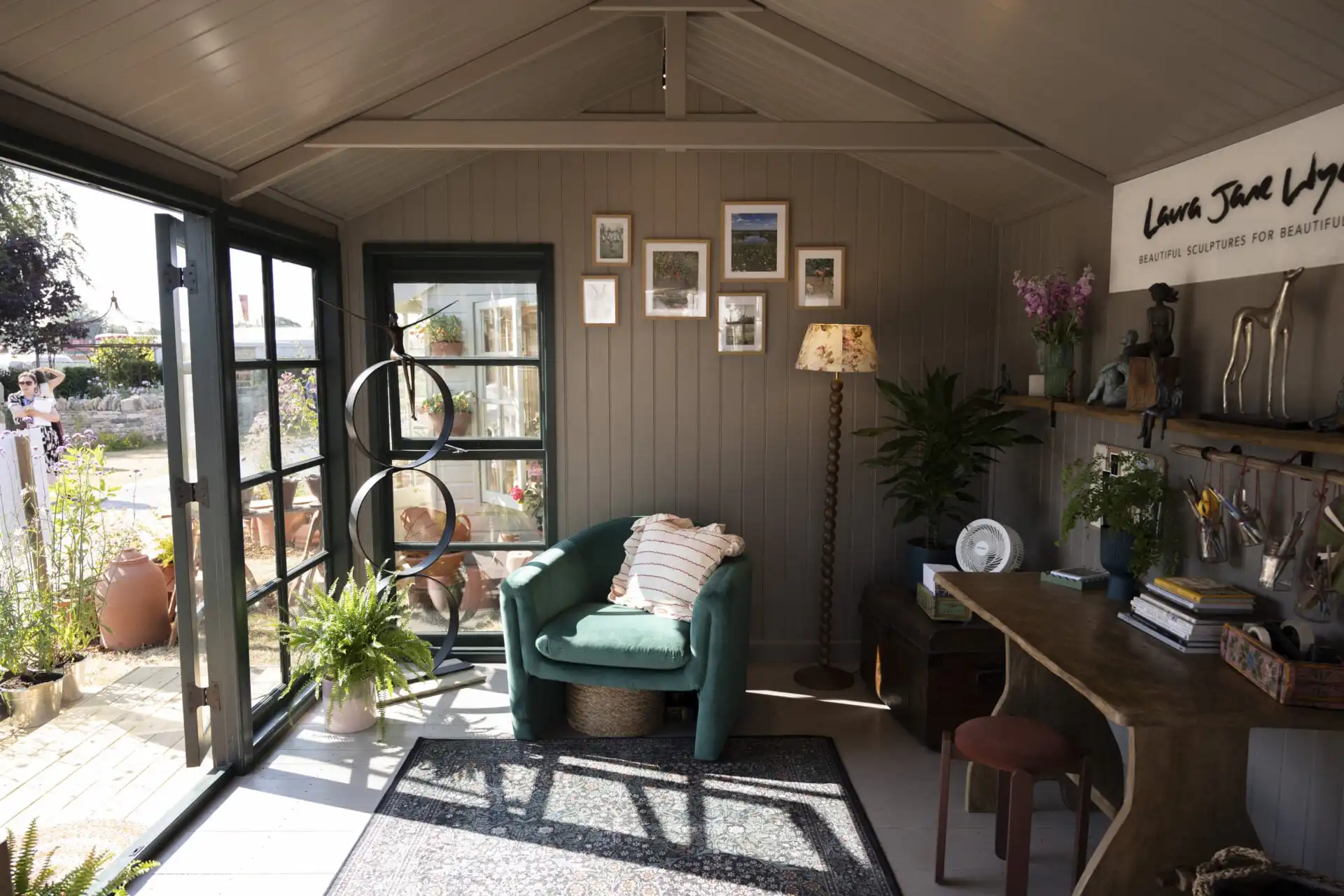
The studio was positioned so its main glazing captured soft, consistent natural light. East-facing windows provided ideal illumination for Laura Jane’s sculpting, allowing her to work accurately without harsh shadows or glare. Natural light is essential to her practice, particularly when creating the subtle details that define her work.
Inside, the space featured clean walls painted in muted tones, providing the perfect backdrop for Laura’s contemporary bronze and stone sculptures. The collection ranged from intimate tabletop pieces to impressive life-size works designed for the garden. Predominantly figurative, her sculptures also explored serene faces and expressive female forms captured in motion. Expansive windows filled the studio with daylight while maintaining the room’s intimate atmosphere.
What Laura valued most was the sense of calm. Despite the busy showground outside, simply closing the doors transformed the Studio Pavilion into a peaceful retreat, with the double glazing providing excellent insulation from noise, as well as the elements. “Having a place to sit and gather inspiration, plan and sketch ideas with a lovely natural view is just as important as having a functional space to sculpt. It felt like a true creative sanctuary,” she observed. The effortless transition from the bustle outside to a quiet, focused workspace resonated with many visitors, who could easily imagine creating a similar artist’s studio in their own garden.
Matt Pasmore: A Potter’s Studio
Designing a Functional Pottery Studio
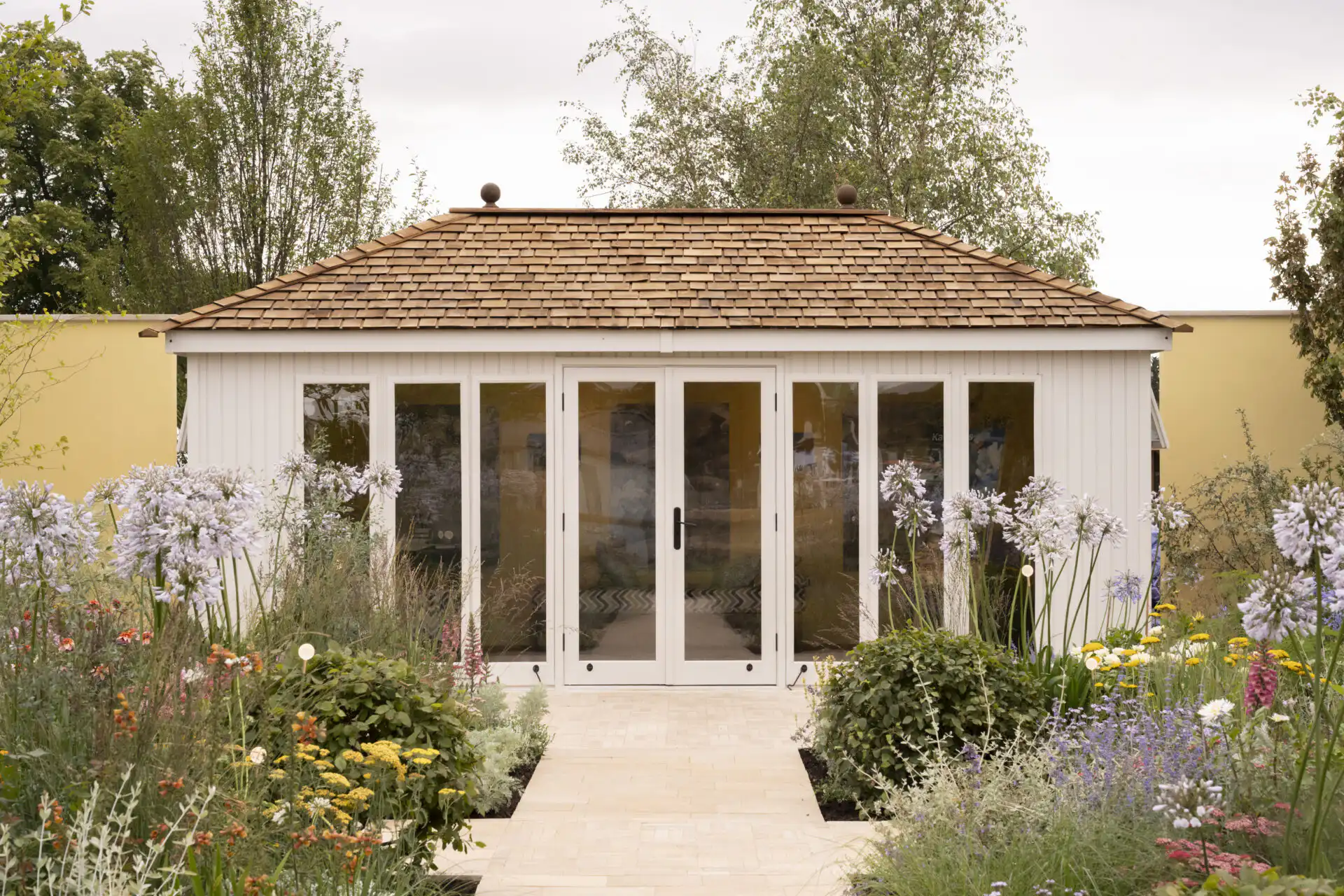
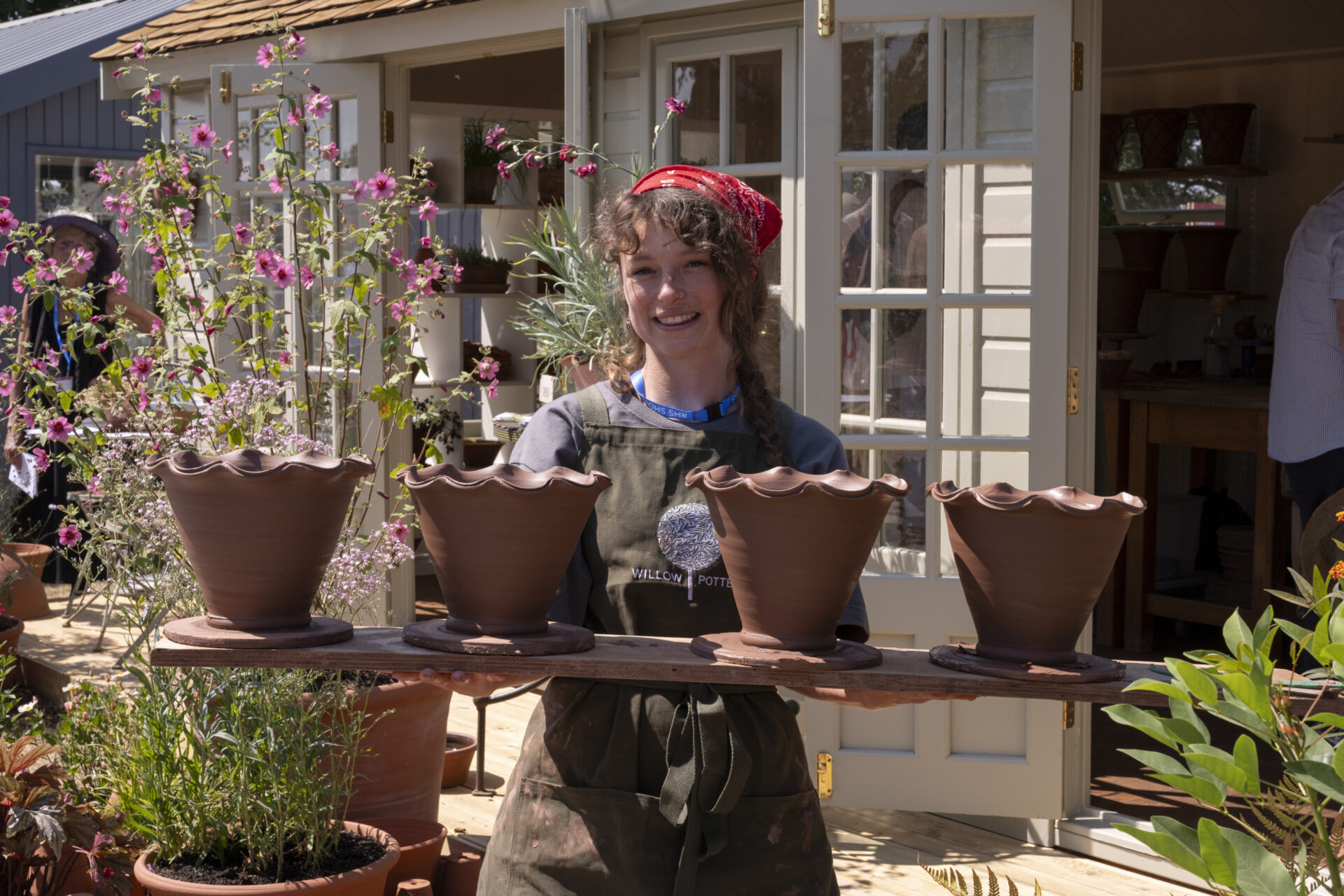
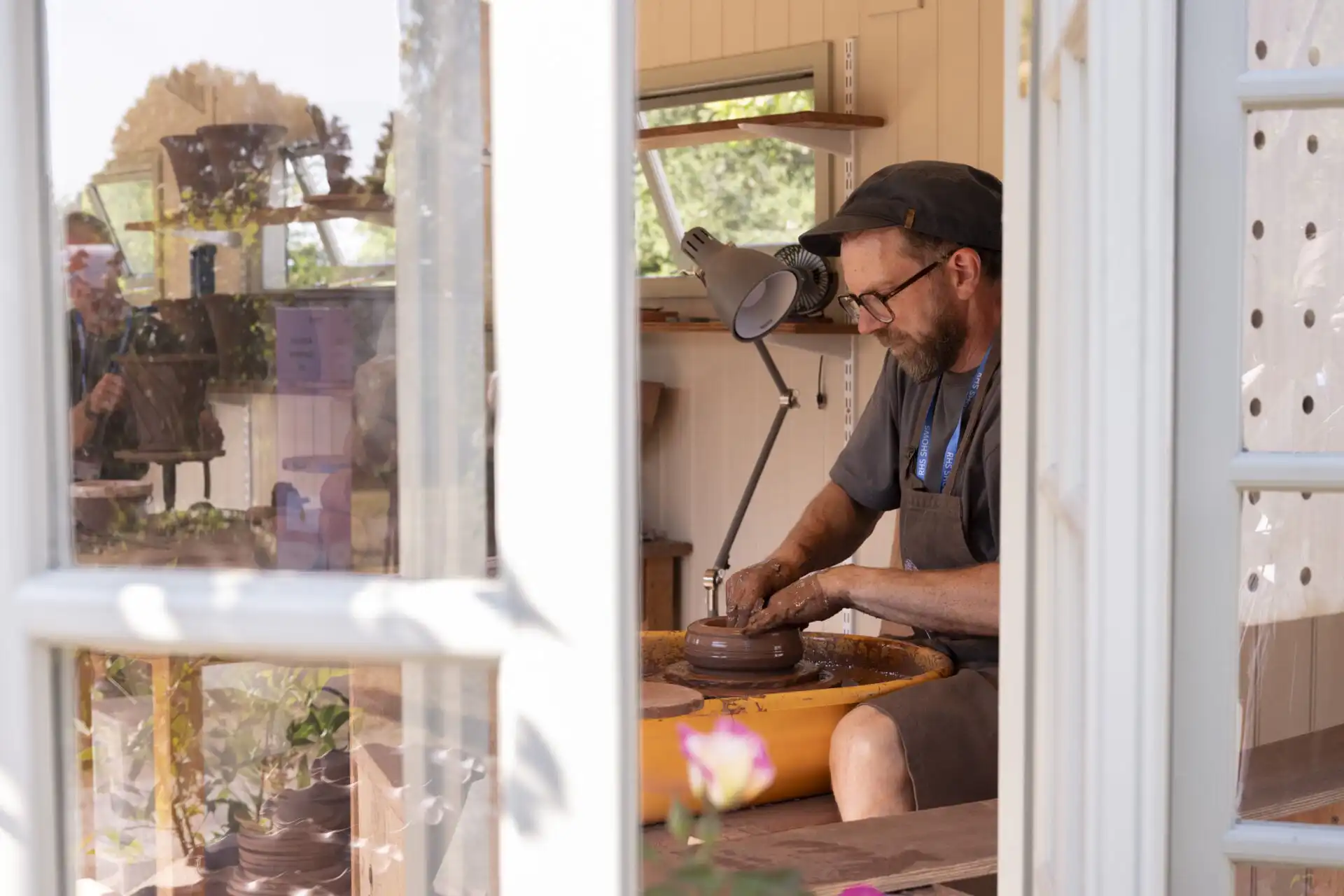
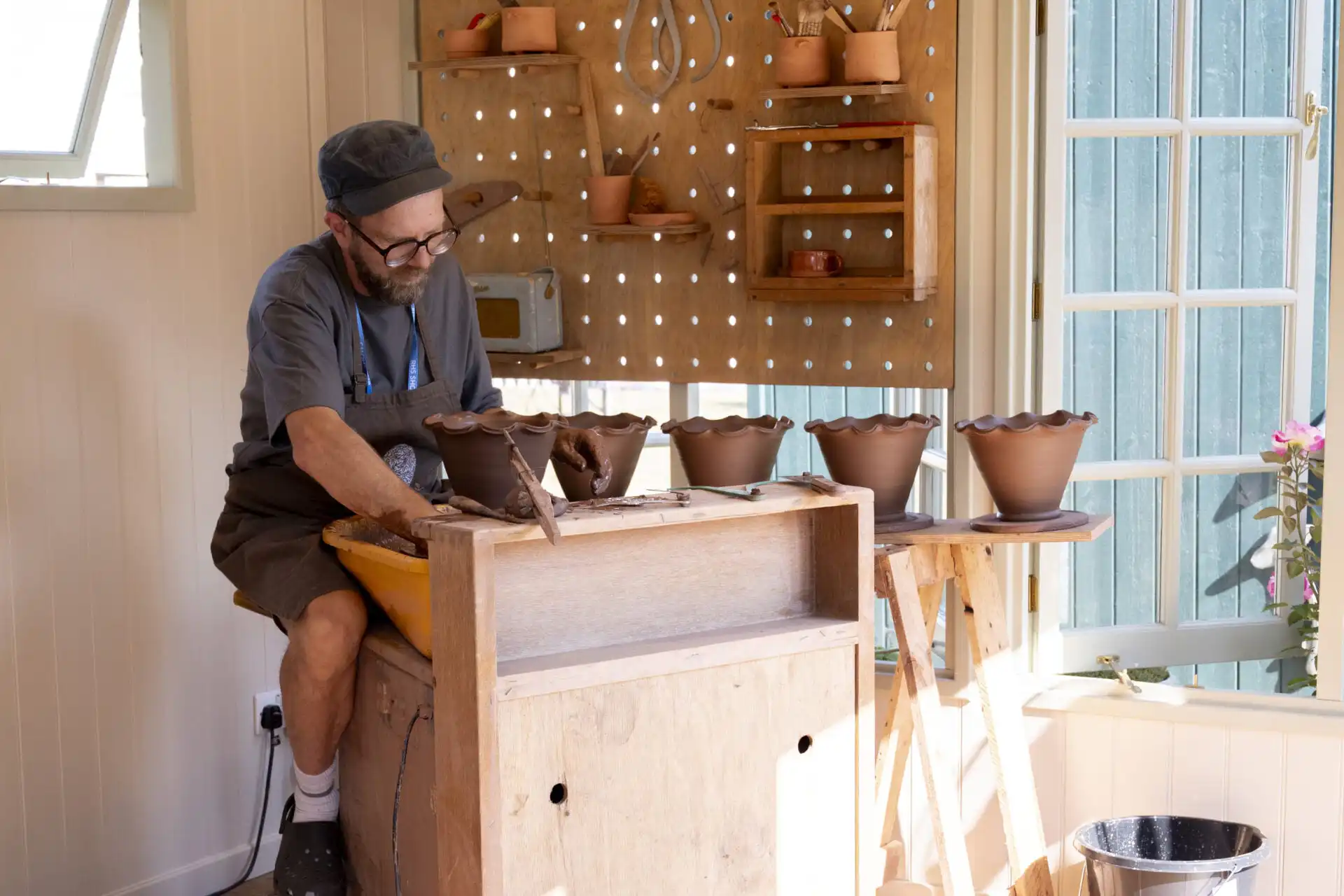
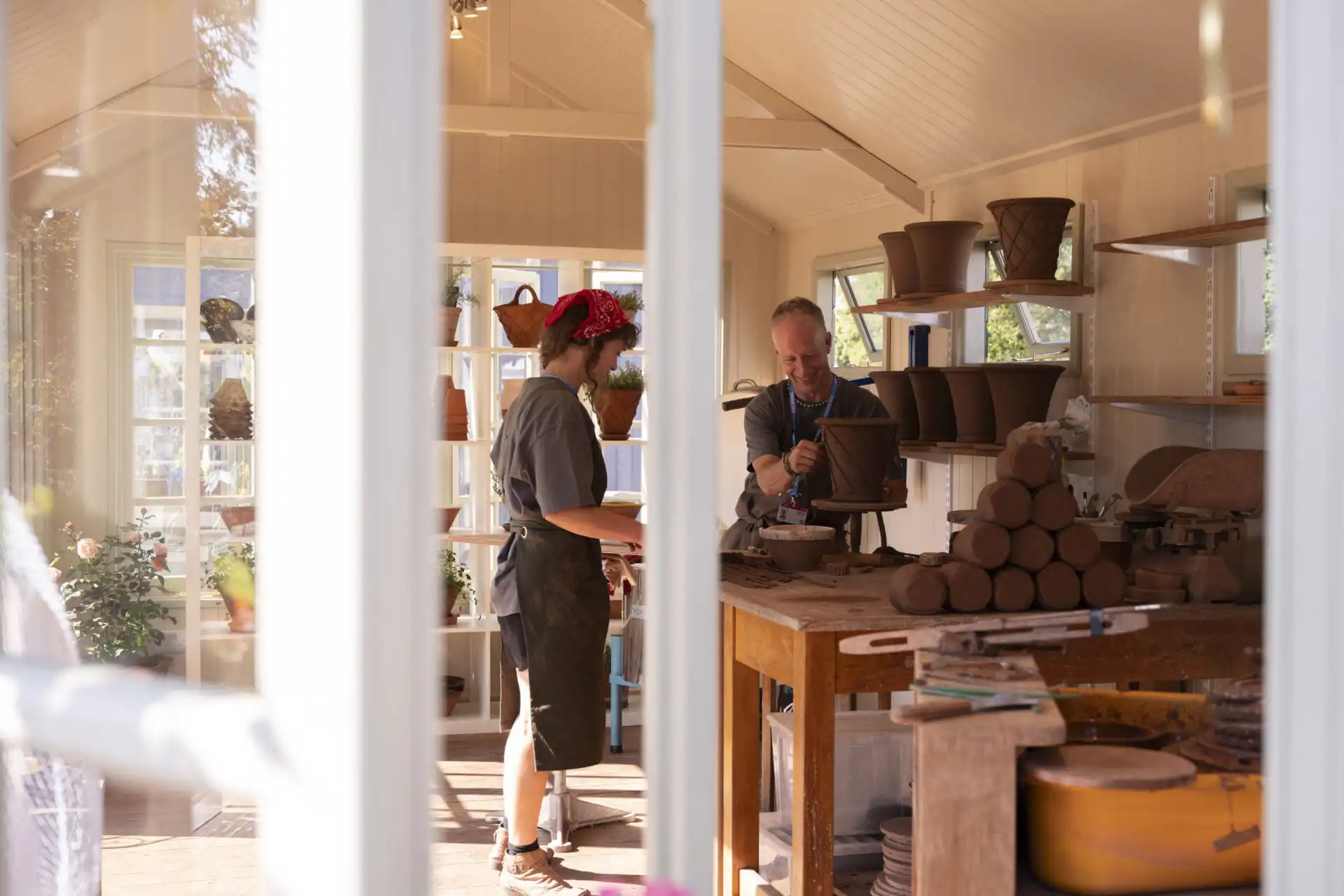
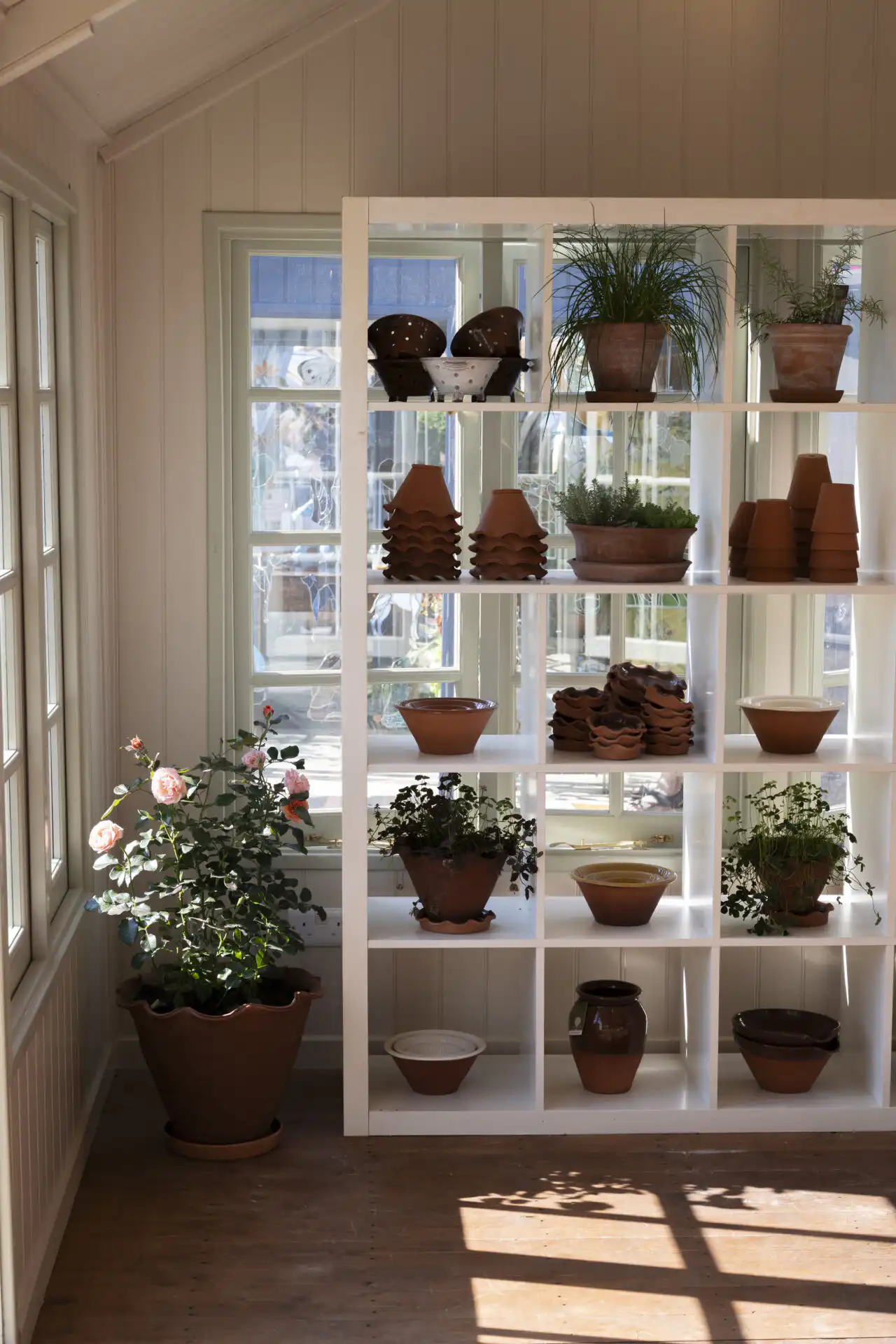
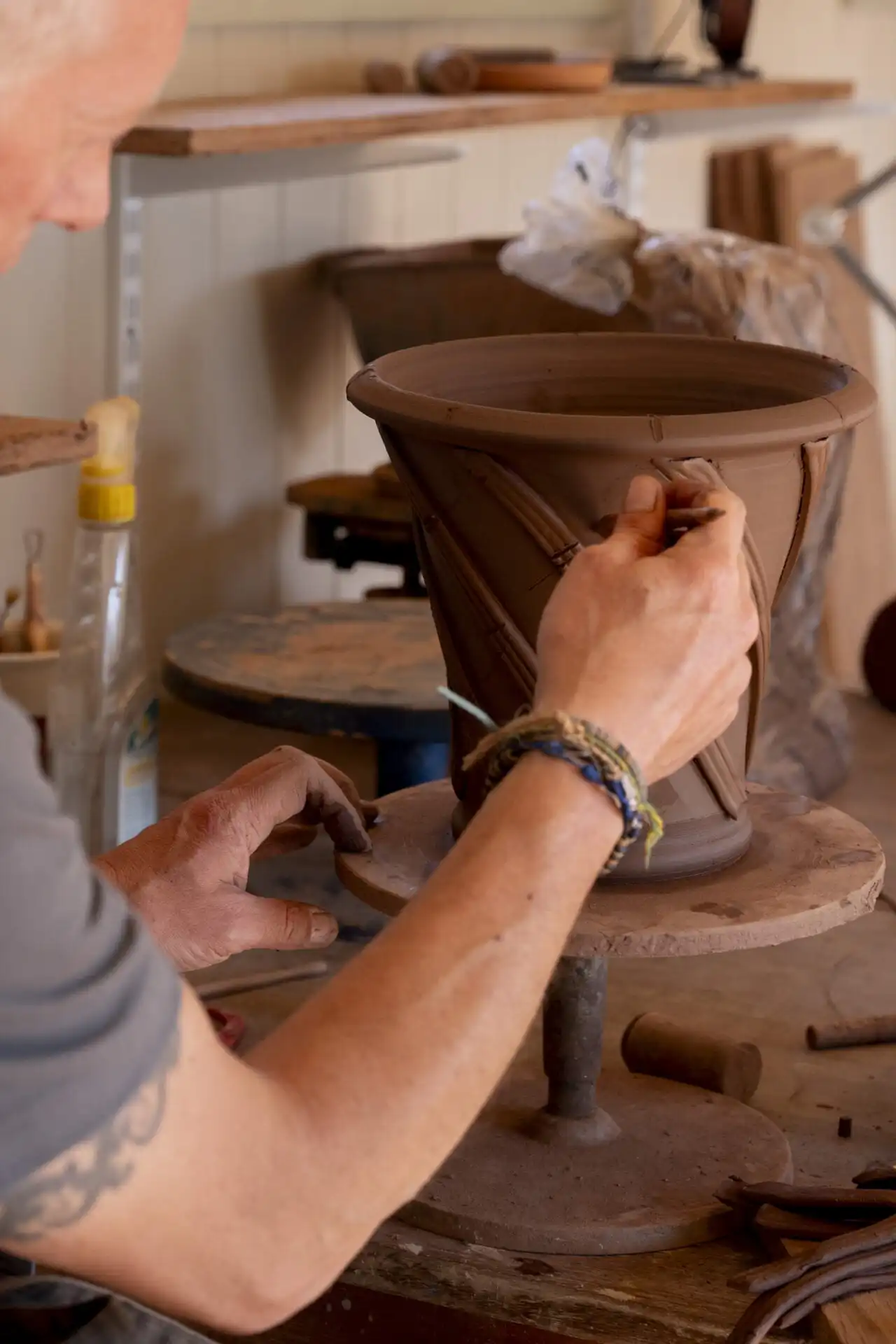
Matt Pasmore of Willow Pottery brought a potter’s wheel, hand-building tools and a display of finished hand-thrown terracotta pieces to his Astwood Pavilion garden room. His studio was slightly deeper than Laura’s, with fixed glazing to the front and high-level opening windows on the rear wall providing effective cross-ventilation.
The layout prioritised function with a heavy workbench along one wall, shelving for greenware and glazes, a corner set aside for a future kiln in a permanent installation, and a rustic floor capable of handling clay spills. The heavy-duty floor construction felt reassuringly solid beneath the wheel, with no noticeable flex or vibration during throwing.
Insulation and energy efficiency were equally important. The studio needed to maintain a stable working environment, with consistent temperatures helping to prevent clay from drying too quickly and reducing the risk of cracking or warping during the making process. Matt appreciated the generous headroom, excellent roof insulation that minimised condensation, and the ability to open the windows wide for fresh air. For pottery studios, underfloor heating is also a practical option, providing gentle, even warmth throughout the year without sacrificing valuable wall space.
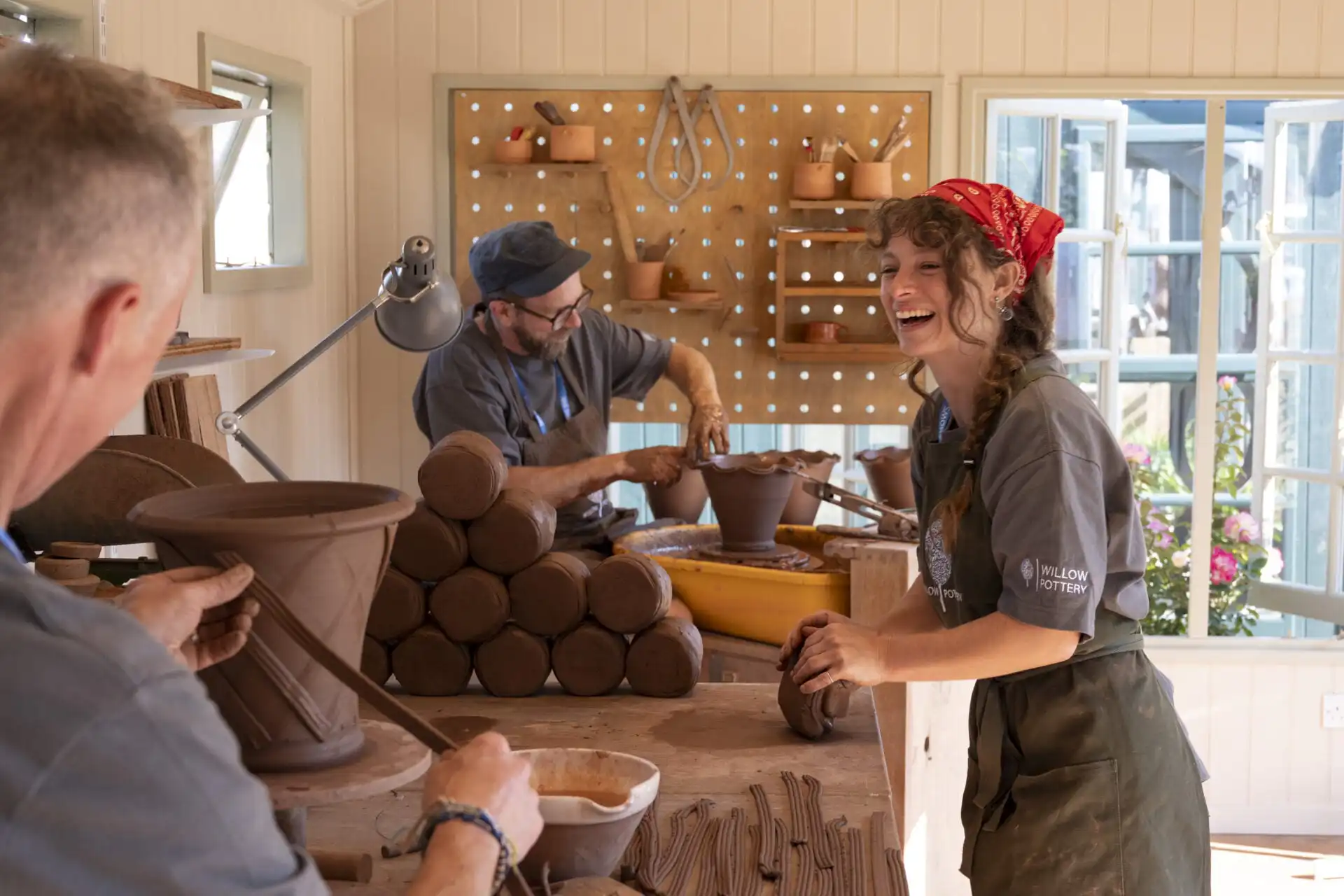
To recreate the atmosphere of a working pottery, Matt demonstrated wheel throwing while studio assistants Tim Moxham and Jessica Stiles prepared clay and decorated pots. The production line in action gave visitors a genuine insight into the craft.

Sarah Davis: A Stained Glass Workshop
Transforming a Studio Pavilion into a Glass Studio
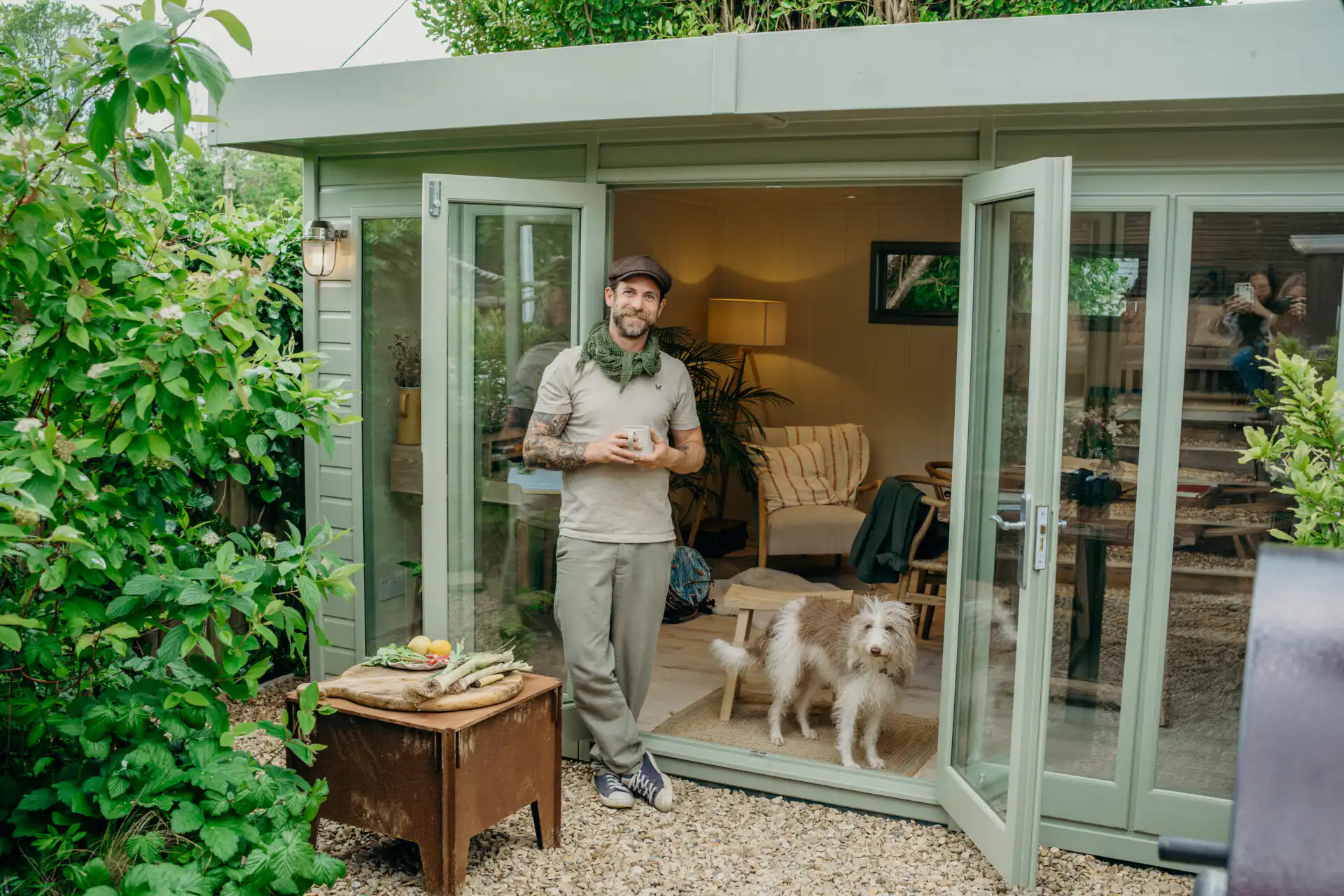
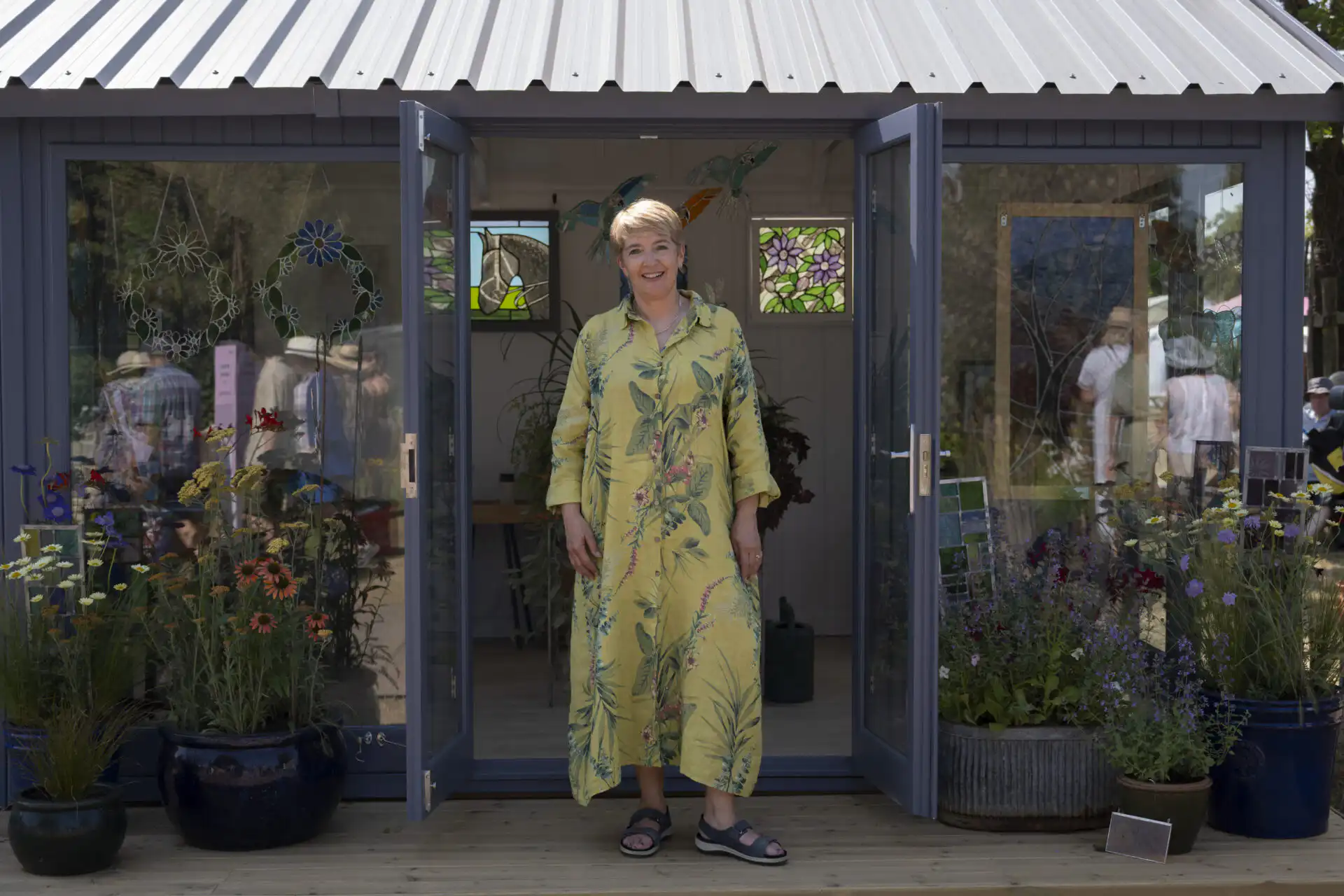
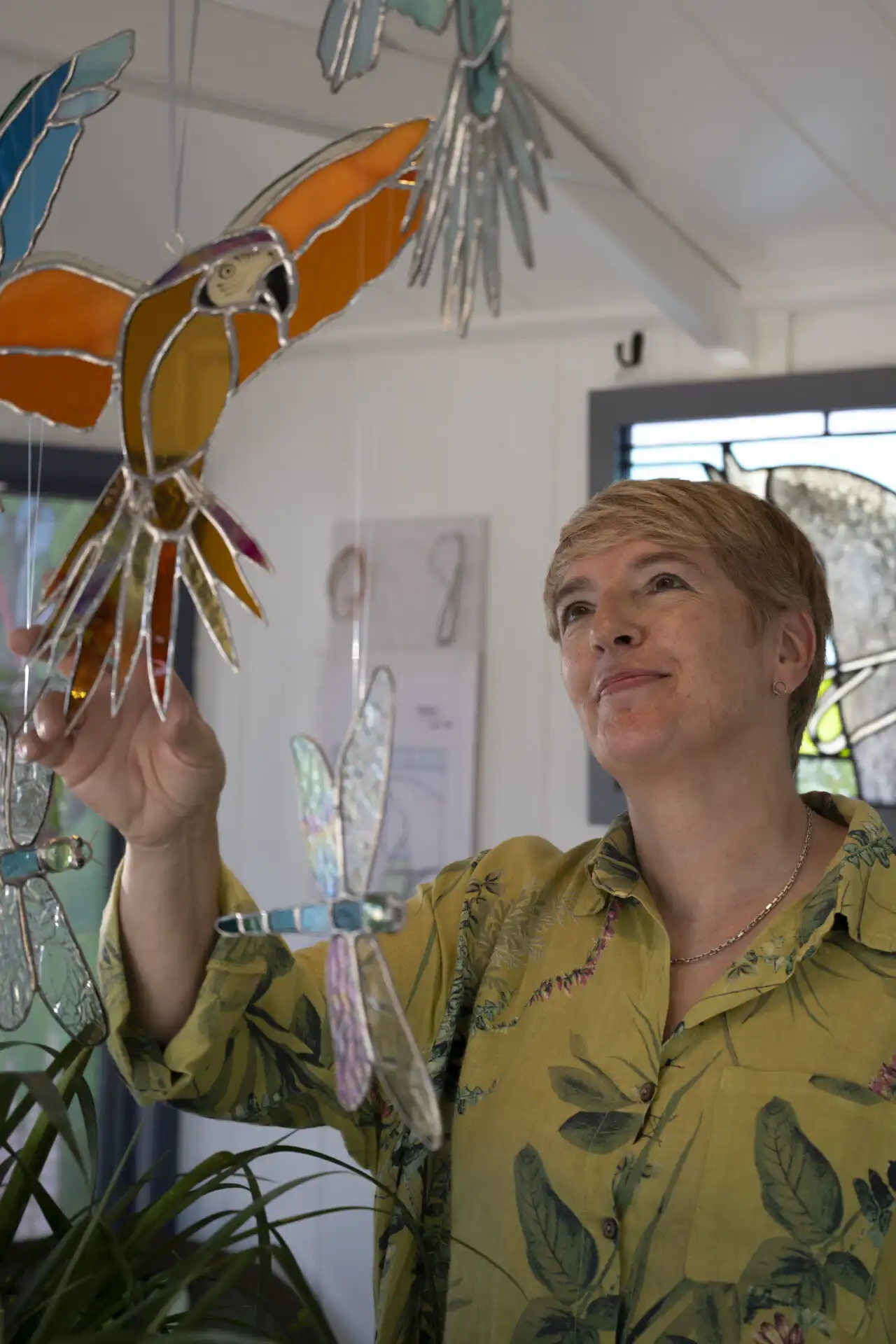
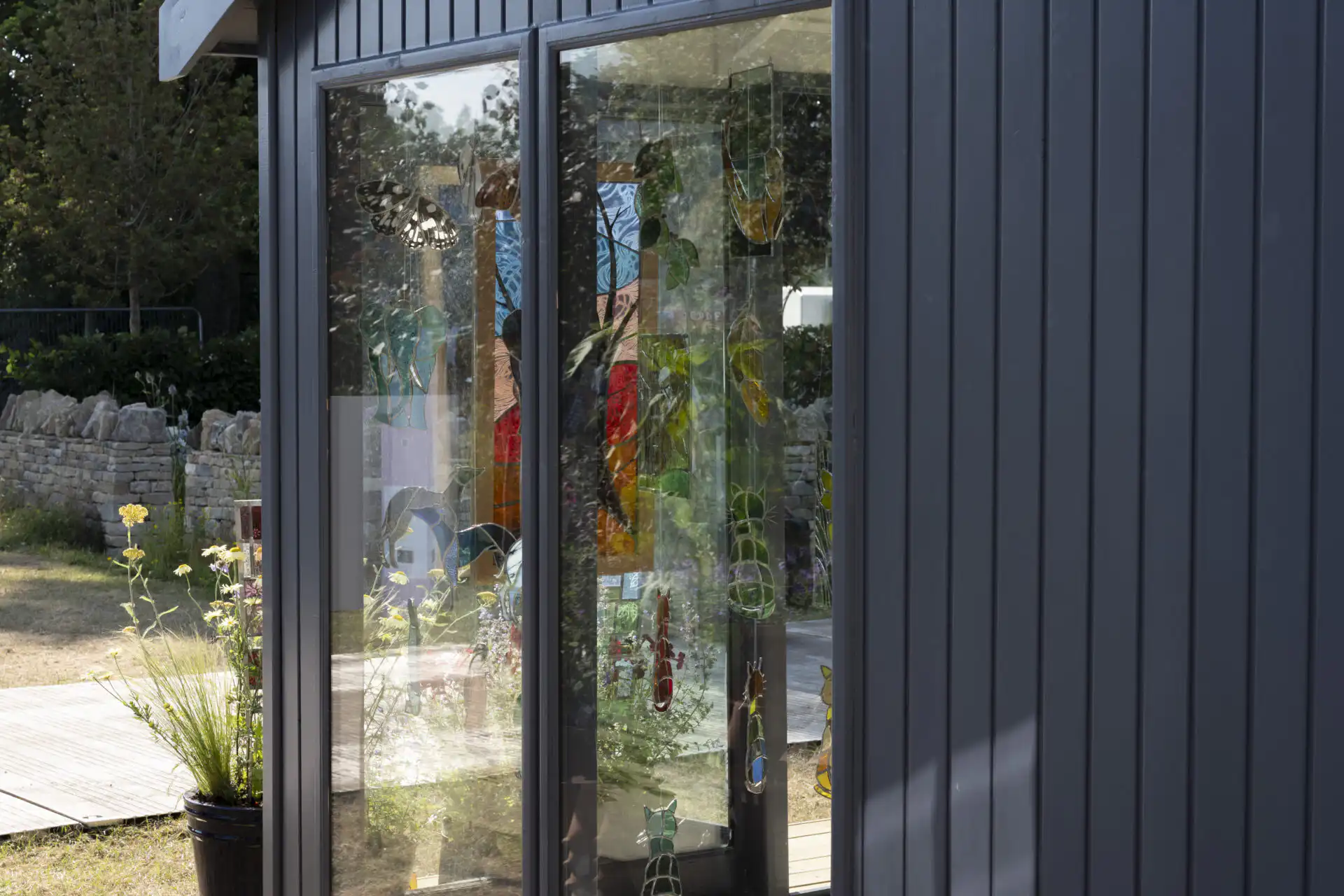
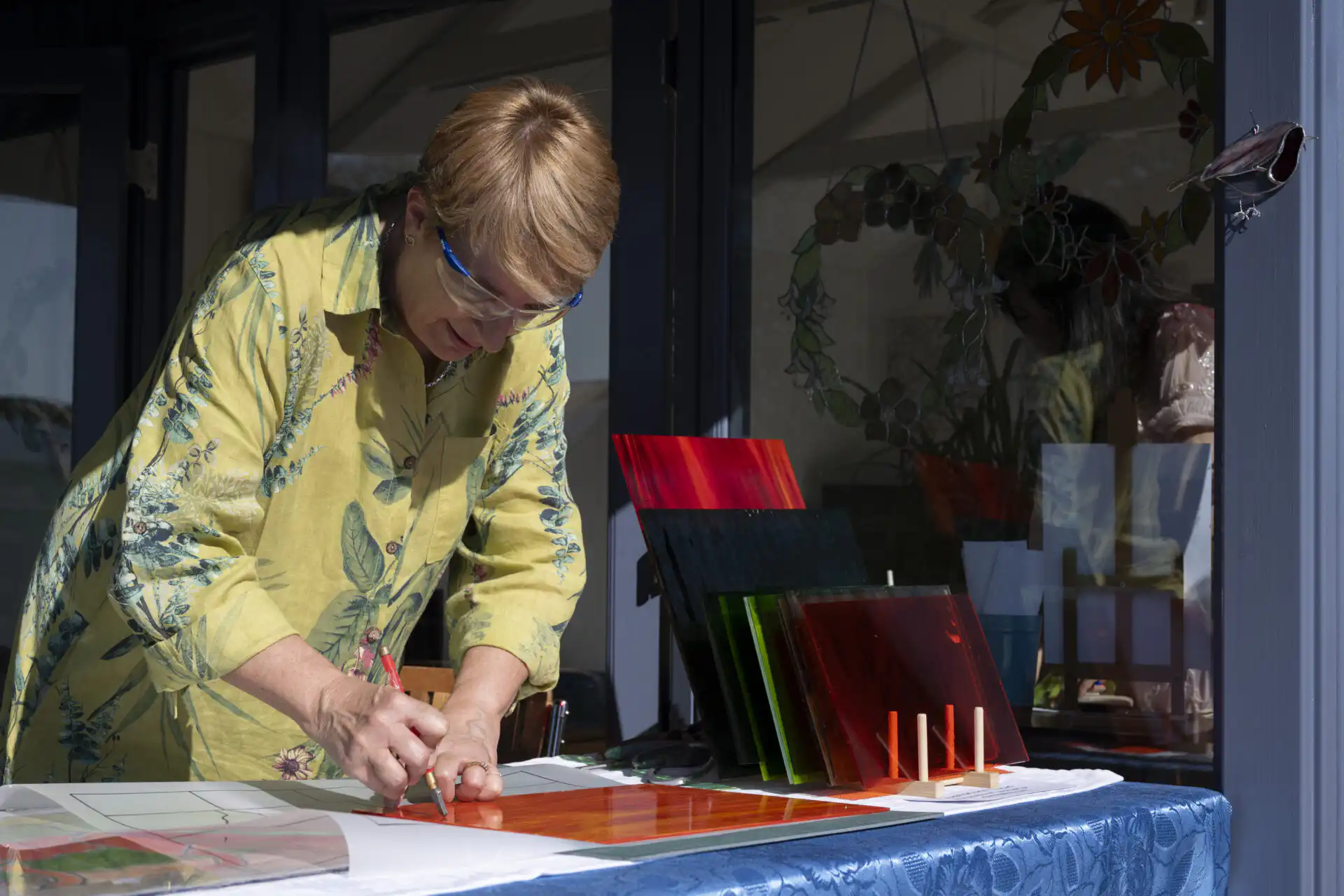
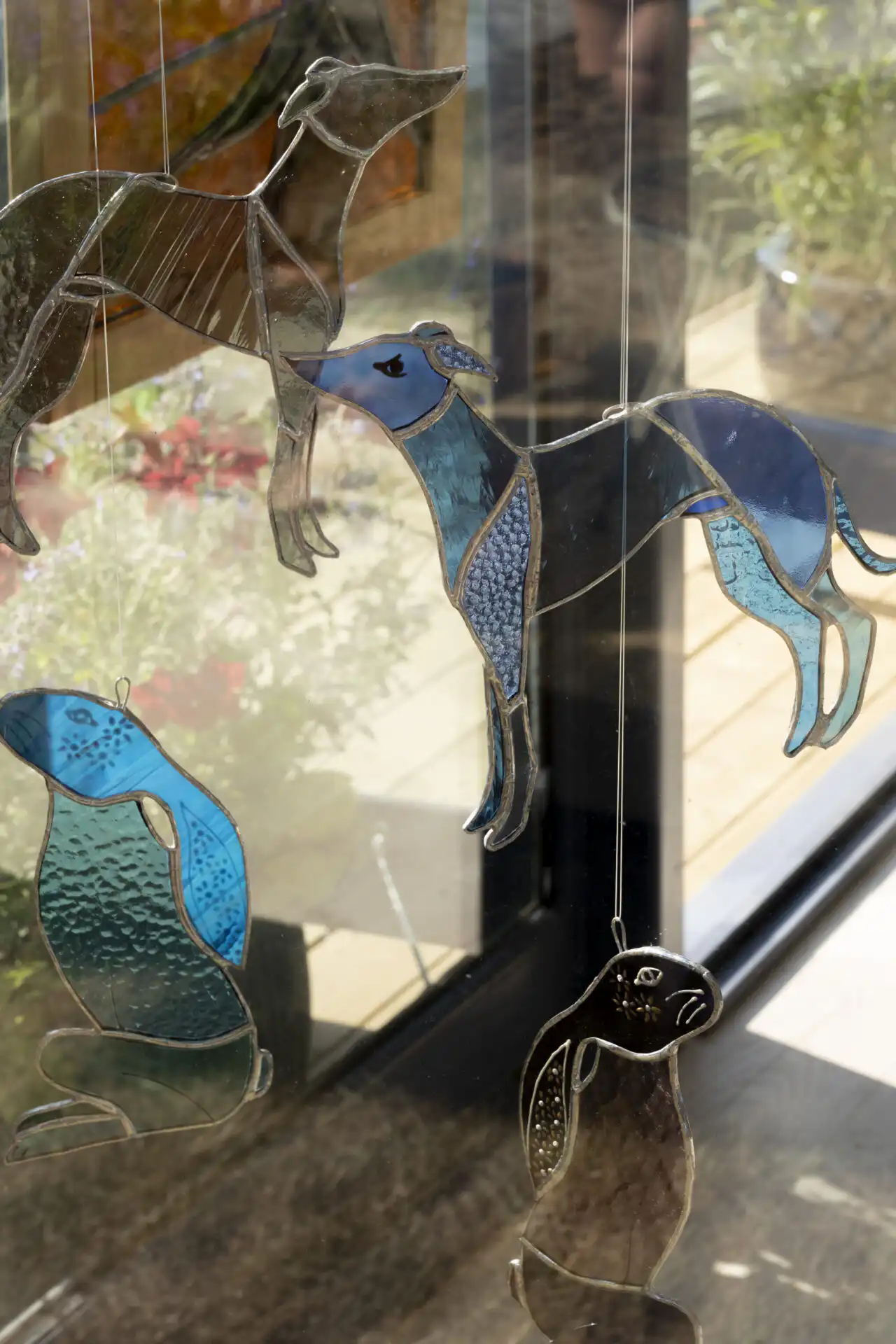
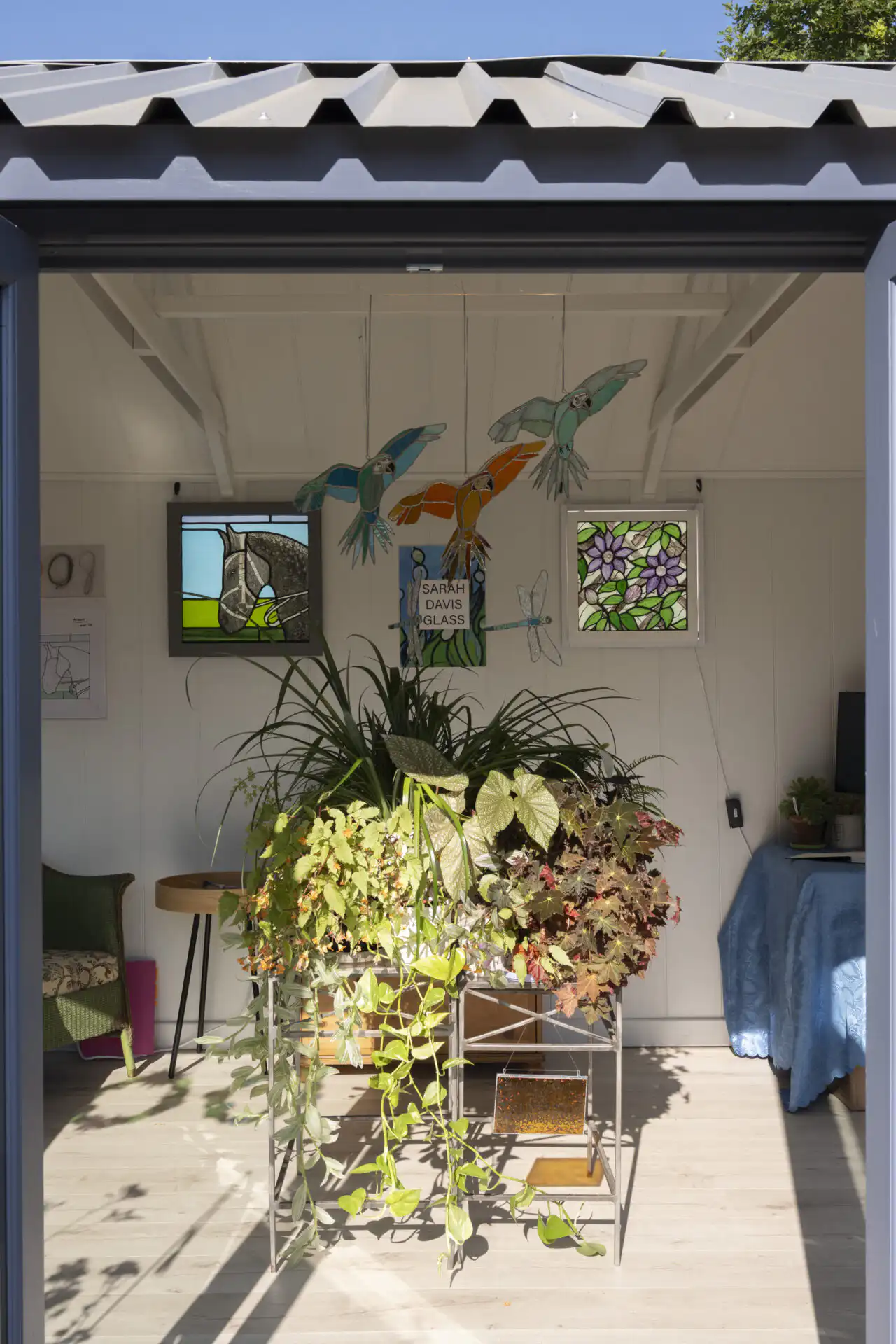
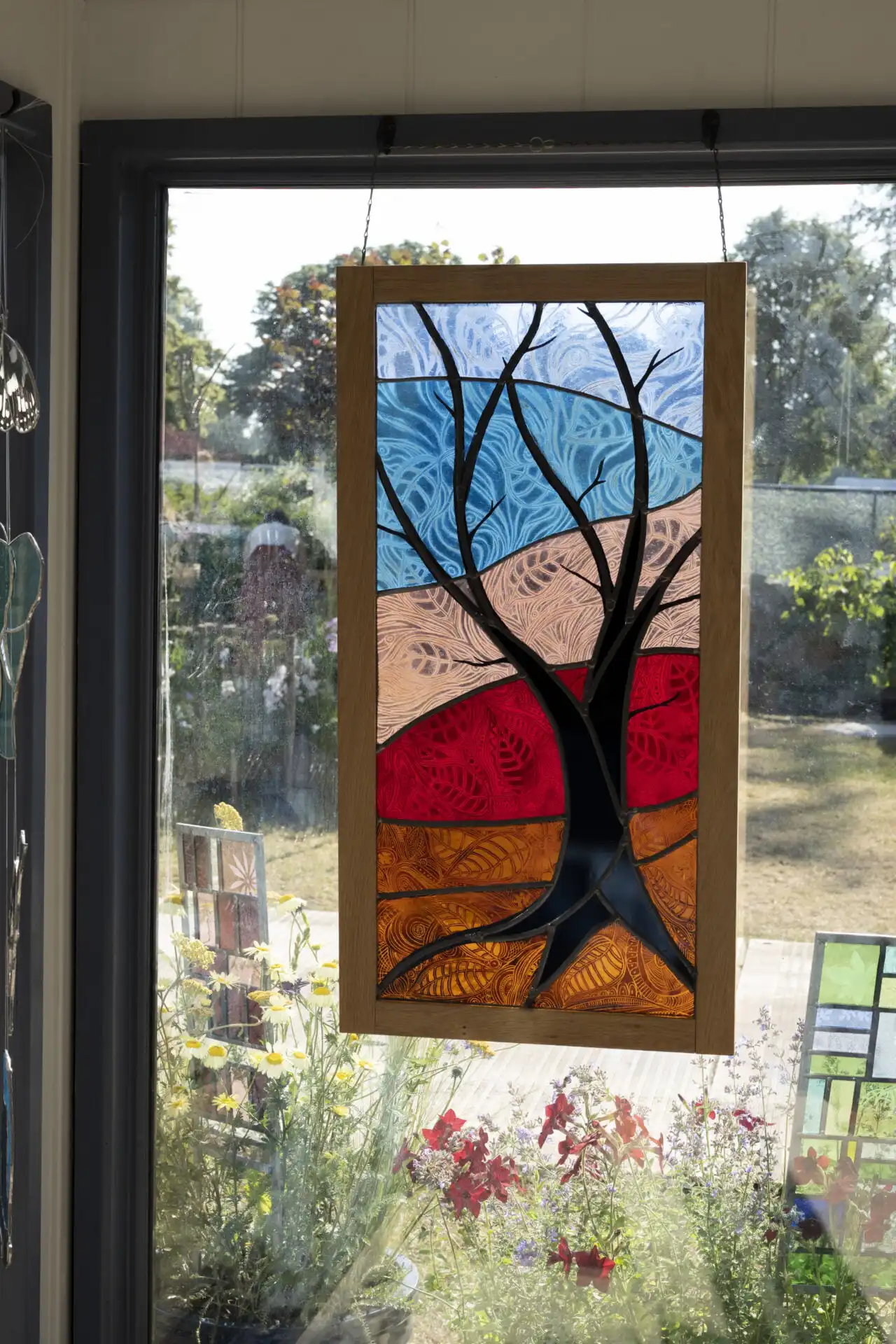
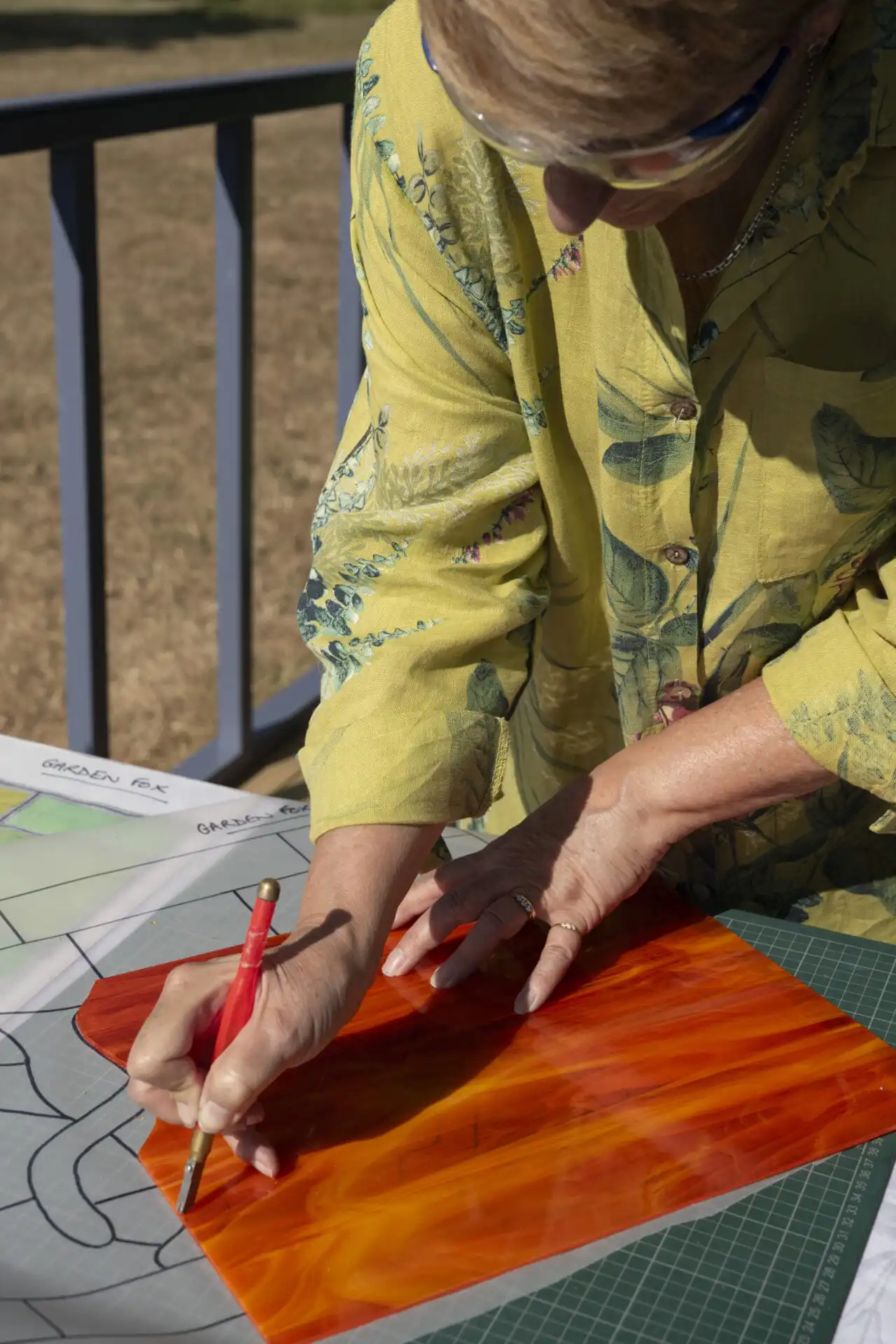
Glass artist Sarah Davis transformed a Studio Pavilion into a stained glass workshop. She demonstrated the process of designing, cutting and assembling leaded stained glass panels, surrounded by finished pieces that caught the natural light and cast vibrant colours throughout the space.
For Sarah, having a dedicated workspace away from the house made an immediate difference. “It was lovely to have somewhere that was just for my art,” she reflected. “At home it’s easy to get distracted by everyday life, and my glass equipment ends up everywhere.” The ability to lock the building securely also meant her tools, materials and finished work could be left safely in place.
Natural light was one of the studio’s greatest strengths. The fully glazed doors and large windows showcased her work beautifully while providing the consistent daylight needed for intricate glasswork. “I could imagine using the building for open studio events,” she said.
Sarah’s work is often inspired by the natural world, so she also appreciated the views of the surrounding gardens and landscape from her workspace.
The Studio Pavilion proved both practical and comfortable. The generous floor space accommodated a workbench and display area while prompting ideas for built-in storage, and plentiful sockets and overhead lighting meant she could easily use equipment such as light boxes and soldering irons.
Despite the exceptionally hot weather, the well-insulated building remained comfortable throughout the day. “I could see myself working in there year round,” Sarah remarked. The covered veranda became another favourite feature, allowing her to work outdoors in the shade with easy access to everything she needed in the enclosed studio.
Designing Your Own Creative Garden Studio with Malvern Garden Buildings
Customisation Options
Just as at RHS Badminton, every Malvern garden art studio is made to order. Our design service means layout, glazing and specification can be adapted to your creative discipline.
Garden studios can be fully customised to fit specific needs:
- Extra width for large canvases or generous wall space for hanging work
- Additional depth for print tables or looms
- Side windows for cross-light, or higher internal walls for display
- Heavy duty floors for kilns, presses or heavy equipment
Design Process
The Malvern Garden Buildings process works in clear stages: browse styles at a local showsite, plan and design your garden room with a specialist, agree final tweaks covering position of doors, windows, electrics and custom storage solutions, then schedule build, delivery and installation by Malvern’s experienced team.
Adapting to Your Needs
Flexibility in design allows garden rooms to adapt as creative practices evolve, so a painting studio today could become a mixed media workshop, home office or music studio later on. Studios can be tailored for different creative activities, and bespoke designs can incorporate sound insulation for music studios alongside storage and other practical features. Malvern Garden Buildings’ outdoor living experts encourage you to bring sketches, Pinterest boards or notebook plans to a showsite so they can be translated into a practical, buildable layout.
Light, Comfort and Climate Control in an Art Studio in Your Garden
Maximising Natural Light
Light and comfort are non-negotiable in any serious creative studio. Natural light enhances mood and productivity in garden studios, and getting the glazing right is one of the most important design decisions.
Guidance on How Much Natural Light You Need:
| Discipline | Glazing Preference | Why it Matters |
| Painting | North or east-facing large windows | Consistent, shadow-free light for colour accuracy |
| Photography | Adjustable blinds on south-facing glass | Control glare while retaining brightness |
| Illustration | Combination of side and roof windows | Maximise natural light without sacrificing wall space |
| Ceramics | High-level side windows | Even light plus ventilation for dust and fumes |
Natural light improves focus and reduces stress levels, and a garden studio can be easily designed with large windows for natural light to support every discipline. A well designed garden studio balances openness with practicality.
Year-Round Comfort and Energy Efficiency
For year round comfort, Malvern buildings can feature fully insulated walls, floor and roof, plus double glazed doors and windows with argon-filled, thermally broken units. Optional extras include electric heating, integral blinds, heavy duty flooring, or modern air conditioning. Stable temperature protects art materials and finished work from cracking, warping or damp. Energy efficient choices such as led lighting, task lighting and high-performance glazing keep running costs manageable for creatives working long hours.
Practical Layout, Storage and Connectivity for Creative Studios
Layout Principles
Turning a beautiful room into a genuinely functional art studio takes planning. Think like the artisans at RHS Badminton: walk through a typical creative day from first coffee to final tidy-up, and let that journey shape where everything goes.
- Keep central floor space clear for movement and large-scale creative work
- Group messy activities near the easiest-to-clean surfaces
- Reserve one wall as a clean display or photography area for selling work online
Storage That Works
Dedicated storage helps keep creative supplies organised in garden rooms.
- Tall shelving for canvases
- Shallow drawers for paper
- Cupboards for glazes and chemicals
- Pegboards for tools
Malvern’s made-to-order approach allows wall bracing and socket positioning to be planned around your storage from the start.
Internet Connectivity and Power
Garden studios can be equipped with reliable power and internet. Specify cabling routes early, add enough sockets for laptops, printers, speakers and chargers, and plan lighting circuits so you can switch between bright work mode and softer evening ambience. Many artists now use their creative garden studio as a filming or online sales space too, so strong connectivity is worth investing in from day one.
Planning, Permissions and Next Steps for Your Art Studio in Your Garden
Most garden rooms do not require planning permission in the UK, provided they meet certain criteria: single storey, covering no more than 50% of the garden area, and staying within height limits near boundaries. Permitted development rights cover most dedicated space uses that are ancillary to the main house, but always check with your local planning authority if your property is listed or in a conservation area.
Malvern Garden Buildings can advise on likely planning requirements and, where necessary, adjust the design so your creative garden studio remains within permitted development.
Your next steps:
Measure
Must-Have Features
Visit a Showsite
Bring your ideas
Imagine your own version of the RHS Badminton artisan studios at the end of your lawn. A dedicated space where creative work can flow freely, surrounded by your garden setting, built to last. High-quality garden rooms are viewed as assets by buyers, so a garden room can add value to your property while transforming your everyday life. Get in touch with Malvern Garden Buildings and make your art studio in the garden a reality. Our owners love working with a team that understands how to build a space where artistic expression and focus come first.
Frequently Asked Questions
These questions cover practical points that often come up once creatives start seriously planning a garden room art studio. Answers reflect Malvern Garden Buildings’ approach and may vary depending on local site conditions and planning rules.