Key Takeaways
- The best garden room lighting combines natural light with three artificial layers: ambient ceiling lights for overall brightness, task lighting for desk work and reading, and accent lighting for evening atmosphere.
- Practical options that work well include dimmable LED downlights, adjustable desk lamps, under cabinet lights, wall lights, string lights, and motion sensor lights for paths.
- Smart controls (timers, app-controlled plugs, voice assistants) are essential when your garden room sits at the bottom of the garden, especially during dark winter evenings.
- Planning your lighting layout before electrical installation saves you from dark corners, trailing cables, and costly retrofit work later.
Living With a Garden Room: Why Lighting Matters
A garden room can become one of the most-used spaces on your property, serving multiple purposes such as a home office, reading nook, or gym. During summer, natural light floods the space, but as the days shorten, additional lighting becomes essential to maintain functionality and comfort. Unlike lighting in the main house, garden buildings often require more deliberate planning due to their detached nature and limited electrical circuits. This guide outlines how to plan and layer lighting for different zones—desk, sofa, gym mat, storage – and shares ideas to consider before installation.

Planning Your Garden Room Lighting From Day One
Begin planning your lighting as soon as you have your garden room design planned, well before the electrician arrives to run the supply. This foresight helps avoid dark corners and trailing extension leads.
- Sketch your exact layout first. Mark where you’ll position the desk, sofa, gym mat, and any other key furniture or equipment. Consider where you’ll sit, stand, read, stretch, and store items.
- Use a winter afternoon as your test scenario. Imagine 4pm on a grey January day. Identify which tasks must be well-lit at that time, such as video calls, paperwork, or early workouts.
- Decide early where to run electrical circuits. Plan how many ceiling points you want and where you’ll need additional sockets for floor lamps, table lamps, and LED strips. Request sockets on multiple walls for flexibility.
- Share your lighting plan with your Malvern Garden Buildings advisor and your electrician*. Providing even a rough sketch enables installers to position sockets and lighting points to suit your bespoke layout.
*We can supply and install the internal cabling on lined and insulated buildings as part of our installation service; you’ll then need to find a qualified electrician to supply and install all fittings and make the necessary connections to the mains supply.
Maximising Natural Light in a Garden Room
Maximise natural light by incorporating generous glazing such as full-height windows and double doors to flood the space with sunlight during the day. Good daylight planning reduces reliance on artificial lighting before dusk, saving energy and creating a pleasant working atmosphere.
- If a garden office, position your desk side-on to the main window. This avoids direct glare on screens while still allowing natural light across work surfaces.
- Consider extra glazing if your plot allows. Large glazed doors or corner glazing can transform a north-facing garden room or one shaded by neighbouring fences.
- Choose pale internal finishes. Light walls, pale timber floors, and minimal window dressings help bounce daylight deeper into the room.
- Add a mirror opposite the doors. A well-placed mirror reflects the garden view and throws extra light into the back of the room, making the space feel bigger and brighter.
Layered Lighting: Ambient, Task and Accent
A single ceiling light is often insufficient. Build three layers of lighting: ambient for overall brightness, task for focused activities, and accent for evening mood.
- Ambient lighting provides the baseline brightness. Dimmable LED ceiling lights set to neutral white (around 3500K) work well.
- Task lighting focuses on specific activities. Use adjustable desk lamps, floor lamps, and under cabinet lights where needed.
- Accent lighting creates atmosphere after hours. Warm string lights, LED strips behind furniture, and picture lights can add warmth and character.
- Wire at least two circuits. Separate main ceiling lights from wall lights to enable bright light for work or softer lighting for relaxation without changing fixtures.
Ambient Lighting Ideas for Garden Rooms
Ambient lighting is vital on overcast days and during darker months, particularly if you’ll be working in your garden office past 4pm in winter.
- LED downlights are the workhorse. Space recessed downlights evenly across the room for consistent, shadow-free illumination.
- Consider a statement pendant. A pendant above a seating area adds character, provided it is positioned high enough to avoid obstruction.
- Wall lights complement vaulted ceilings. Up-and-down wall washers provide a soft glow that flatters timber linings.
- Always fit a dimmer switch. Adjust brightness from full “office mode” to gentle “cinema mode” for versatility.
Task Lighting for Work, Reading and Hobbies
Strong, targeted light is essential for work and hobbies in your garden office or hobby room.
- Desk lighting matters most. Use articulated desk lamps with adjustable colour temperature to eliminate shadows and provide accurate lighting.
- Reading corners benefit from warm floor lamps. A warm glow creates a cosy atmosphere without harsh overhead light.
- Under cabinet lights illuminate worktops. LED strips under shelves provide focused light for detailed tasks.
- Gym and yoga areas prefer indirect light. Wall washers or uplighters create soft, even illumination without glare.
Accent and Mood Lighting for Evenings
Softer, decorative lighting transforms the garden room into a cosy retreat.
- Fairy lights add instant warmth. Drape warm white string lights along beams or shelves.
- LED strips behind TVs reduce eye strain. A subtle halo effect softens screen contrast.
- Small chandeliers suit traditional spaces. Low-wattage chandeliers or vintage pendants add charm without overpowering.
- Battery-powered candles provide flickering ambience without fire risk.
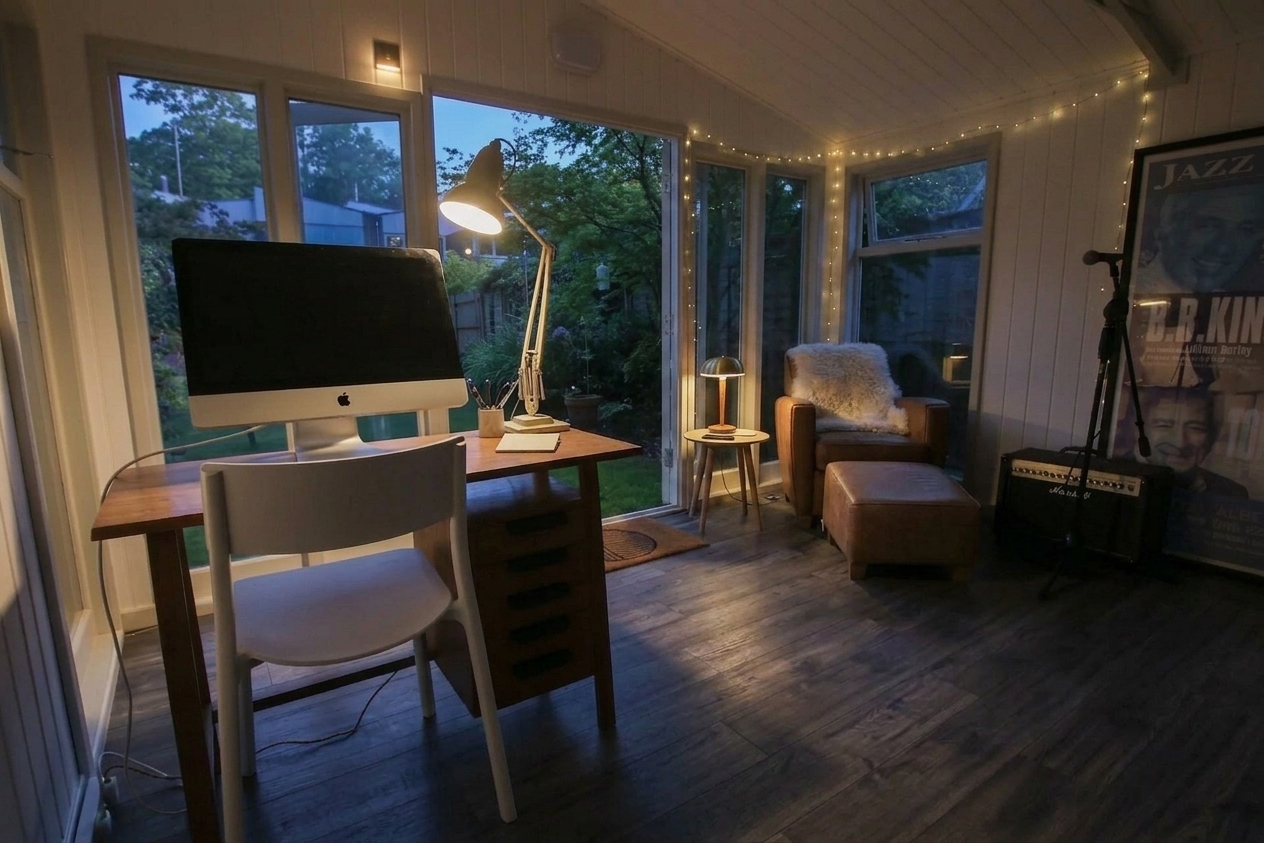
Garden Office Lighting: Working Comfortably All Year
Comfortable, focused lighting prevents eyestrain and enhances productivity, especially during dark mornings.
- Combine overhead and directional light. Dimmable ceiling lights provide ambient base light in your garden office; adjustable desk lamps handle close-up tasks.
- Choose neutral white for accuracy. A desk lamp around 4000K keeps colours true on screen, while ceiling lights at 3500K avoid a clinical feel in your garden office.
- Plan sockets on both sides of your desk wall. This provides flexibility for multiple monitors and avoids trailing cables.
- Good blinds combat glare. Use blinds to reduce screen glare from windows, especially if your garden office is south-facing.
Video Call and Screen-Friendly Lighting
Proper lighting helps you look professional on video calls.
- Avoid harsh single downlights overhead. Multiple spaced fittings plus soft lamps behind screens create flattering, even illumination in your garden office.
- Consider clip-on monitor lights. Small light bars above laptop cameras provide better lighting than room lights alone.
- Reflect light off walls rather than aiming bulbs at your face. Indirect lighting looks more natural on camera.
- Keep lighting consistent. Maintain similar setups for professional appearance year-round.
Lighting a Garden Room Reading Nook or Cinema Space
Create a warm, relaxing atmosphere in reading or cinema corners.
- Prioritise warm, low-level lights. Use shaded floor lamps, string lights, and dimmed ceiling lights.
- Place lamps beside seating, not above. Side lighting reduces glare on screens and pages.
- Create a cinema switch. Separate switches for overhead and TV backlighting allow mood control.
- Use blackout curtains or blinds. These create darkness for viewing and help retain heat.
Creating a Cosy Atmosphere
- Layer small lamps rather than one bright light. Multiple low-wattage sources feel cozier.
- Stick to warm white light for relaxation. Around 2700K mimics traditional sitting room warmth.
- Add dimmers and fabric shades to wall lights. Diffused light is gentler and more flattering.
- Use decorative lighting intentionally. Picture lights or lit display shelves add personality.
Garden Room Gym and Wellness Space Lighting
Lighting should support safe, comfortable workouts and wellness activities.
- Bright but diffused lighting works best. Avoid direct glare during floor exercises.
- Wall washers and uplighters provide soft, even illumination.
- Use neutral white light for energy. Around 3500-4000K feels invigorating.
- Warm white lighting (under 3000K) is preferred for relaxation or yoga spaces to create a tranquil feel.
- Separate controls for gym zones help manage lighting independently.
Smart, Remote and Outdoor Lighting Around the Garden Room
Ensure safe and convenient lighting inside and outside your garden room.
- Control lights remotely. Use smart bulbs and plugs to switch lights on/off from your phone or voice assistant.
- Set timers for automatic lighting. Schedule lights to come on at sunset and off at bedtime.
- Install motion sensor lights on paths. PIR-triggered lights provide hands-free illumination and security.
- Use solar lights along walkways. Solar-powered garden lights are ideal where running cables is impractical.
Exterior Lighting That Complements Your Garden Building
- Choose proportionate wall lanterns. Weatherproof fixtures with warm white LEDs create a welcoming entryway.
- Use low-glare bollards or spike lights to highlight planting. These enhance nighttime views without light pollution.
- Install subtle eaves downlights for contemporary styles. These wash light down cladding elegantly.
- Use outdoor-rated fittings (IP44 or higher). Ensure safety and durability for external lights.

Choosing Bulbs, Colour Temperature and Energy Use
Selecting the right bulbs impacts comfort and efficiency.
- LED bulbs are the default choice. They offer low running costs, long life, and minimal heat.
- Understand colour temperature. Warm white (2700K) suits relaxation; neutral (3000-3500K) suits mixed-use; cooler (4000K) energises work areas.
- Choose dimmable LEDs and check compatibility. Ensure bulbs work with your dimmer switches to avoid flickering.
- Limit colour temperatures to two per space. This maintains visual harmony.
Practical Safety and Installation Tips
- Use a qualified, Part P-registered electrician. They ensure safe wiring and compliance with regulations.
- Plan for future upgrades. Request extra conduit, spare sockets, and switch positions for flexibility.
- Use IP-rated fittings where needed. Especially important for external lights.
- Coordinate with your electrician. Discuss lining materials, wiring routes, dimming, and smart controls before sign-off.
FAQ: Garden Room Lighting Questions to Consider
Can I retrofit better lighting after installation?
Yes. Swapping bulbs, adding floor/table lamps, surface-mounted LED strips, and smart plugs is easy. Adding fixed ceiling or wall lights may require an electrician but is straightforward if access exists.
Do hobby studios need different lighting than garden offices?
Creative spaces benefit from brighter, directional task lighting and higher colour rendering index LEDs for accurate colours. Ambient lighting is similar but bench and under cabinet lighting may be upgraded.
Are smart bulbs worth it in a garden room?
Smart bulbs and plugs offer remote control, scheduling, and energy savings. Colour-changing bulbs add versatility, reducing the number of different fittings needed.
How bright should garden room lights be?
Aim for 100-150 lumens per square metre of ambient light. For a 12m² room, 1200-1800 lumens ambient plus 400-800 lumens task lighting typically works well.


